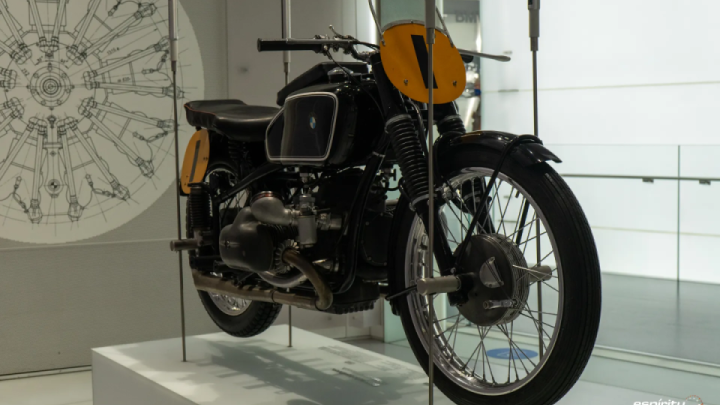
BMW Type 255 About - Overview, History & Details
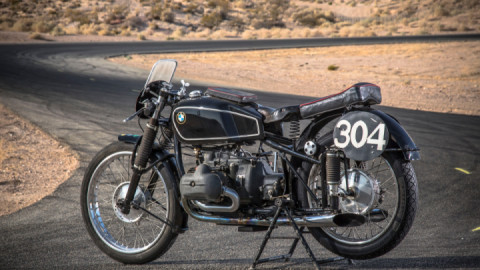
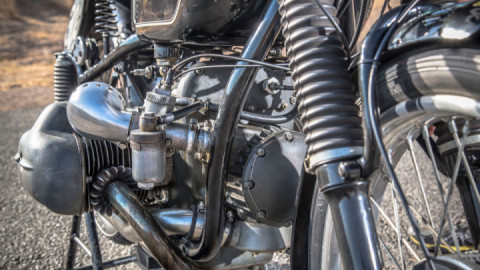
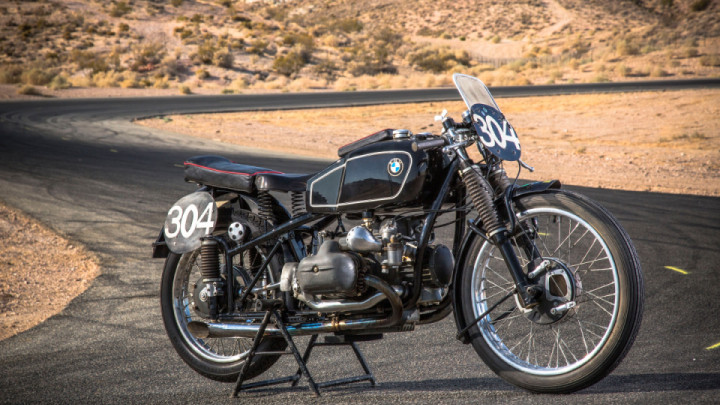
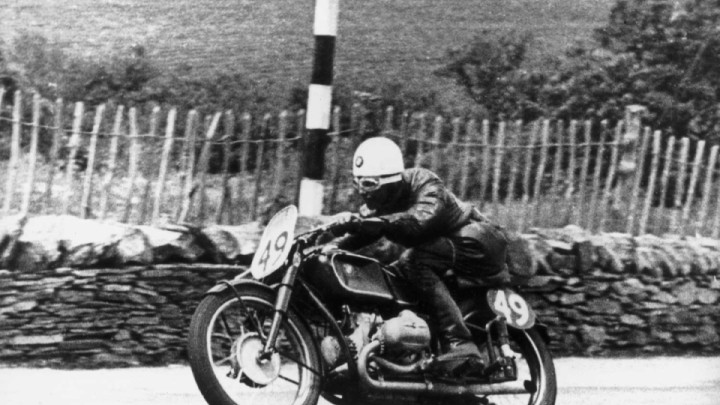
The BMW Type 255 was the competition flat-twin that carried BMW’s pre-war supercharged racing effort to its peak. Built in the late 1930s as a factory Grand Prix machine rather than a road motorcycle, it sat at the sharp end of the 500 cc racing class and became inseparable from one of the most famous episodes in BMW competition history: Georg Meier’s victory in the 1939 Senior TT on the Isle of Man. That win mattered because it was not simply another result on a fast German racing motorcycle. It was the first Senior TT victory by a non-British rider on a non-British machine, achieved on a highly specialised BMW that combined a horizontally opposed twin, shaft final drive, and supercharging at a time when most rivals still relied on more orthodox single-cylinder or transverse four-cylinder racing layouts.
When people refer to the BMW “Kompressor” racers of the period, the Type 255 is usually the machine they mean. It was not a catalogue model in the way a contemporary roadgoing BMW R12 or R17 was. It was a works racer, developed within a narrow set of racing regulations and used by factory riders in international competition before the Second World War brought that chapter to an abrupt end.
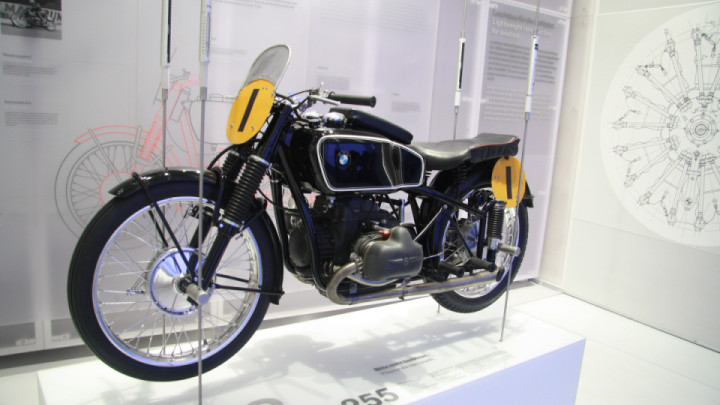
Why BMW built it
BMW entered motorcycle racing in earnest during the interwar years as part of a broader effort to prove that its engineering ideas could compete against the established powers of European motor sport. The company’s flat-twin layout was already a defining feature of its road machines, but racing exposed both its strengths and its limits. The boxer engine offered good primary balance, a low centre of gravity, and effective cooling of the cylinder heads because the cylinders sat directly in the airstream. It also created packaging problems for an all-out racer, especially once power outputs rose and aerodynamic efficiency became more important.
By the mid-1930s, Grand Prix motorcycle racing had become a technical arms race. Supercharging was central to that escalation. Forced induction allowed relatively small engines to produce far more power than their naturally aspirated capacity would suggest, and manufacturers across Europe explored different combinations of engine layout, valvetrain, and induction system. BMW’s answer was to refine its opposed-twin racing line into a highly developed, blown 500. The Type 255 emerged from that process.
The company did not invent the idea of the racing supercharger, and it was not alone in pursuing it. But BMW’s interpretation was unusual enough to stand apart. Where some rivals chased performance with singles or fours and chain drive, BMW remained committed to the flat-twin and shaft drive formula. That decision was partly rooted in brand identity and partly in confidence that careful engineering could offset the layout’s disadvantages.
Engineering concept
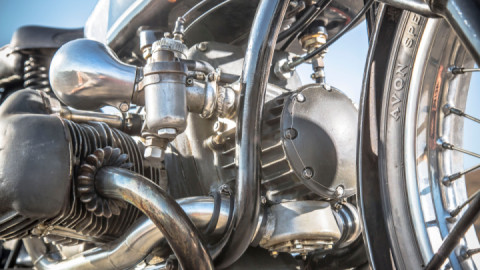
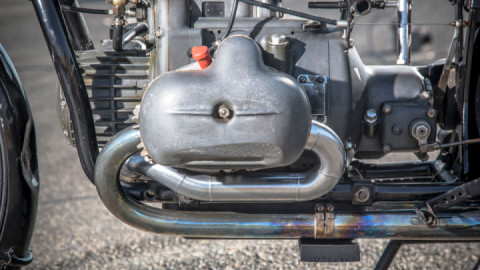
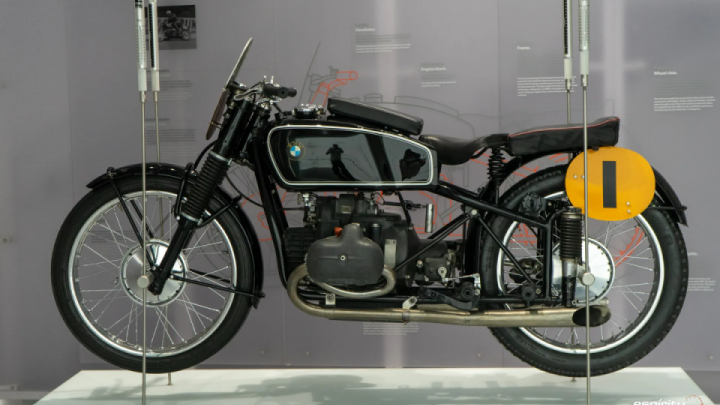
At the centre of the Type 255 was a longitudinally mounted flat-twin engine of 500 cc class, using overhead valves and a mechanically driven supercharger. In a boxer twin, the cylinders lie opposite one another and the pistons move in and out on each side of the crankcase. On a BMW of this period, the crankshaft ran fore and aft in the frame, which made shaft final drive straightforward because the power line already pointed toward the rear wheel.
For racing, BMW and its engineers pushed that familiar arrangement into much more specialised territory. The Type 255’s supercharger forced a denser charge of fuel and air into the engine than atmospheric pressure alone could provide. In simple terms, that let the engine burn more mixture in each cycle and produce much more power for its size. Period figures published for BMW’s blown racers vary depending on date and source, but the Type 255 is generally described as producing around 60 bhp in late form, an enormous number for a 500 cc motorcycle engine of the time.
That output came at a price. Supercharged racing engines of the era were mechanically complex, highly stressed, and often peaky in their delivery. They demanded precise setup and careful riding, especially on long road circuits where reliability mattered as much as sheer speed. Fuel consumption was heavy. Heat management was difficult. Throttle response could be abrupt, and traction on narrow pre-war tyres was never guaranteed.
BMW’s shaft drive also shaped the bike’s character. A shaft was clean, durable, and less exposed than a chain on filthy road circuits, but it added weight and imposed its own design compromises. On a racing motorcycle, that made BMW’s success more notable, because chain drive was generally lighter and more common in top-level competition. The Type 255 showed that BMW could make a shaft-driven machine genuinely competitive at the highest level of its day.
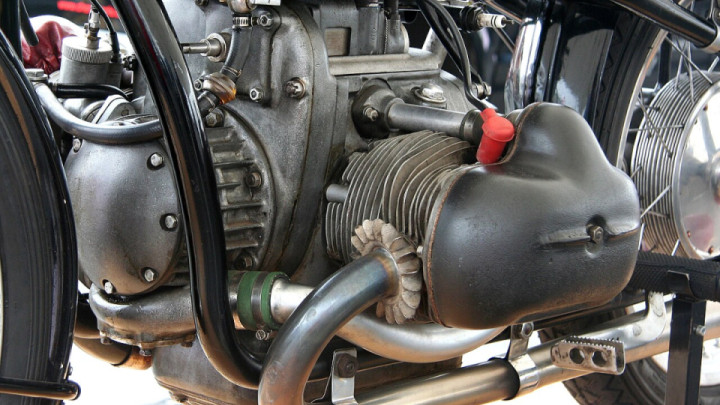
Frame, chassis, and aerodynamics
The Type 255’s cycle parts reflected the period before modern racing chassis design had settled into post-war norms. Pre-war Grand Prix motorcycles still relied on steel frames, relatively narrow tyres, and suspension systems that now look primitive beside telescopic forks and swinging-arm rear ends that became common later. Even so, factory racers were already being refined around stiffness, weight distribution, and aerodynamic drag.
BMW used a tubular steel frame and, on key occasions, streamlined bodywork. The best-known form of the Type 255 wore substantial dustbin-style fairing panels, intended to cut drag and raise top speed on fast courses. On a machine whose performance depended heavily on carrying speed, that mattered. The Isle of Man TT in particular rewarded motorcycles that were both fast and stable over a long lap run at very high average speed.
Those fairings could also make a racing motorcycle more sensitive to crosswinds and steering inputs. That was a general issue with the period’s full streamlining rather than a flaw unique to BMW. Riders had to trust what would now seem very limited tyres and brakes while managing a machine capable of serious speed on public-road circuits lined with stone walls, poles, and hedges.
The suspension and brakes belonged to that same era of compromise. BMW racers of the late 1930s used girder-type front suspension rather than the telescopic fork system that BMW itself would later popularise on road motorcycles. A girder fork used linked members and a central springing element to guide front-wheel movement. Properly developed, it could work well by the standards of the day, but it did not offer the bump control or torsional rigidity riders later expected from modern forks. Braking relied on large drums, effective only within the limitations of tyre grip, heat fade, and road conditions then available.
How it rode in period terms
No responsible modern article should pretend that a pre-war works racer is easy to describe in everyday terms. Most surviving impressions come from period reports, factory history, and retrospective accounts rather than from broad comparative testing. Still, the Type 255’s basic character is clear enough.
It was fast, demanding, and specialised. The supercharged boxer did not exist to be tractable in traffic or forgiving to an inexperienced rider. It was built to cover long distances at racing speed. Contemporary descriptions of BMW’s Kompressor machines emphasise their speed and stamina, but also the discipline required to use them well. The shaft drive gave a different feel from chain-driven rivals, the flat-twin layout kept mass low in the chassis, and the forced-induction engine provided a level of performance few motorcycles could match in the late 1930s.
That did not automatically make it the simplest or most agile machine in every situation. A blown 500 with shaft drive and full racing equipment carried technical burdens as well as advantages. On tight sections, on poor surfaces, or under heavy braking, the Type 255 demanded commitment. It was a motorcycle for factory riders, not for private owners looking for an accessible club racer.
The 1939 Senior TT and Georg Meier
The Type 255’s place in history rests above all on the 1939 Isle of Man TT. Georg Meier, already one of BMW’s leading riders, won the Senior TT aboard the supercharged works machine after a race that has been retold for decades in BMW and TT history alike. The importance of the result goes beyond simple nationalism or statistics. Before Meier’s victory, the Senior TT had been dominated by British riders and British motorcycles to such an extent that foreign success at that level seemed close to impossible.
Meier’s win broke that pattern. It showed that BMW’s highly developed flat-twin racer could survive and prevail in what many considered the hardest road race in the world. The TT exposed weaknesses brutally: engines failed, brakes faded, tyres suffered, and riders had to manage changing conditions over a very long course. A machine that won there had proved more than peak speed.
The 1939 race has acquired a near-mythic status, and for good reason, but it is worth resisting some of the polished legend that later surrounded it. The Type 255 did not suddenly render every other racing design obsolete, and the broader story of pre-war racing remained technically diverse. What Meier’s victory did prove was that BMW’s unconventional top-level racer was no curiosity. It was the real thing.
Racing career beyond the TT
The Type 255 should not be reduced to a single race, even though the 1939 Senior TT inevitably dominates its reputation. BMW’s supercharged racers competed in Grand Prix and other major international events during the late 1930s, and the Type 255 formed part of a serious factory programme rather than a one-off experiment. Sources on exact event-by-event specifications are not always fully consistent, partly because pre-war works machines evolved continuously and were sometimes described under broader “Kompressor BMW” terminology rather than with the precision later historians might prefer.
What is clear is that BMW was among the leading European manufacturers in the 500 cc class during this period, and that the Type 255 represented the mature form of its pre-war blown flat-twin racing line. In speed events and high-profile road races, it gave BMW a machine capable of running with the best available opposition.
The outbreak of war in 1939 ended normal international racing and froze development of motorcycles like this one. That matters when judging the Type 255’s historical place. Its story was not allowed to run its natural course. There was no immediate peacetime continuation in which BMW could simply refine the same concept year after year against uninterrupted rival development.
How it compared with its contemporaries
The Type 255 was unusual even in a highly inventive era. Many of its rivals in the 500 cc racing class followed lighter or more familiar patterns. British makers often relied on single-cylinder racers with strong torque and relative mechanical simplicity. Gilera and Moto Guzzi pursued different Italian solutions, while NSU and DKW represented other strands of German engineering ambition in smaller classes and, at times, in advanced experimental design.
Against that field, BMW’s racer stood out for three linked choices: a flat-twin instead of a single, shaft drive instead of chain, and supercharging pushed to a high level in a road-racing context. Each choice had benefits, and each carried baggage. The boxer layout helped balance and cooling. The shaft reduced chain-related maintenance issues and suited BMW’s engineering tradition. The supercharger unlocked exceptional output. But the result was not a minimalist motorcycle. It was technically dense, expensive to develop, and heavily dependent on factory support.
That last point helps explain why the Type 255 did not become a template for mass racing production. It was a works solution to elite competition, not a production-based formula that privateers could easily buy, maintain, and race in large numbers.
Why motorcycles like the Type 255 disappeared
The Type 255 belonged to a short but spectacular era of supercharged motorcycle racing. After the war, the Fédération Internationale de Motocyclisme banned supercharging from world championship motorcycle competition. That single rule change made the central idea of the pre-war BMW Kompressor obsolete in front-line racing. The reasons were practical as much as philosophical: blown engines were expensive, complicated, and increasingly disconnected from production motorcycles.
Without supercharging, the specific Type 255 formula had no direct future. BMW continued to race and later built successful post-war sporting machines, but the pre-war blown boxer became a historical branch rather than the start of a continuous line. The world that had produced it had gone.
That also explains why the Type 255 occupies a slightly different place from later famous racing motorcycles. It was not the ancestor of a long dynasty of outwardly similar production superbikes. Its significance lies in a concentrated burst of technical ambition before the war, capped by one of the sport’s most important road-racing victories.
Reliability, maintenance, and the limits of ownership
For most motorcycles, an ownership section would discuss service intervals, used-buying checks, and common faults. With the Type 255, the situation is different. This was never an ordinary customer machine, and surviving examples are rare, historically important, and usually held in museums, factory collections, or serious specialist hands. Standard consumer advice does not really apply.
Even when new, it would have required expert maintenance. A supercharged pre-war racing engine needed exact attention to ignition, fuelling, lubrication, and internal condition. Components were highly stressed, and race preparation formed part of the machine’s normal life rather than an exceptional event. Any modern running example depends on specialist knowledge, careful restoration practice, and a clear understanding that authenticity and operability can pull in different directions. Some preserved racers are maintained to run. Others are conserved primarily as historical artefacts.
Because the Type 255 was a works machine produced in tiny numbers, broad claims about “common owner problems” would be misleading. Age-related issues on surviving bikes are inseparable from provenance, restoration quality, and the availability of correct parts. What can be said with confidence is that it was never a simple machine, and time has not made it simpler.
Design legacy and historical importance
The BMW Type 255 sits at the intersection of several important stories in motorcycle history. It represents the high point of BMW’s pre-war supercharged racing programme. It marks the moment when BMW proved, on one of the sport’s most demanding stages, that a German flat-twin with shaft drive could beat the British establishment at the Senior TT. And it captures a period when motorcycle engineering still allowed radically different answers to the same racing question.
It also reminds us that technical success does not always lead to a long production legacy. The machine’s defining feature, the supercharger, was banned from the very championship culture that had given it purpose. So the Type 255 survives less as the beginning of a familiar lineage than as evidence of a path racing once took and then abandoned.
That is why historians, BMW enthusiasts, and TT followers still return to it. Not because it was an ancestor of every later BMW sports motorcycle, and not because it was common, but because it compressed an extraordinary amount of engineering ambition into a brief span of years and left behind one result that permanently altered the map of top-level road racing.