Ducati 848 About - Overview, History & Details
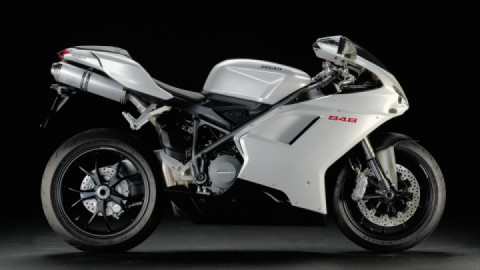
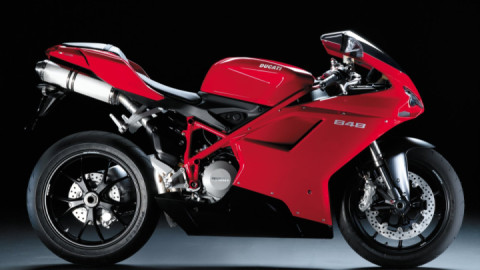
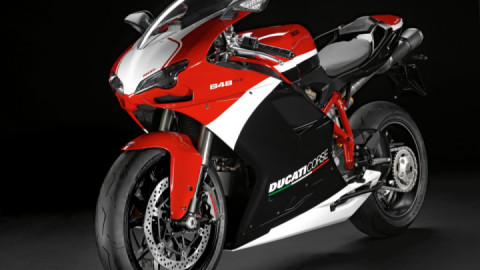
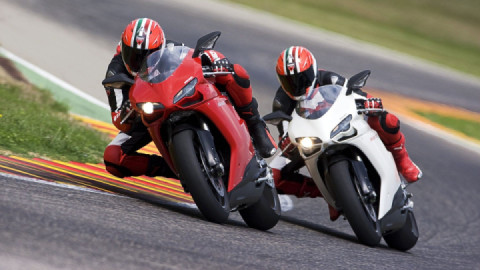
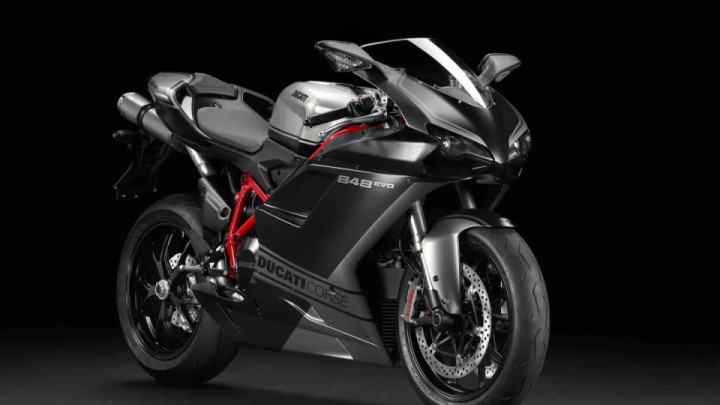
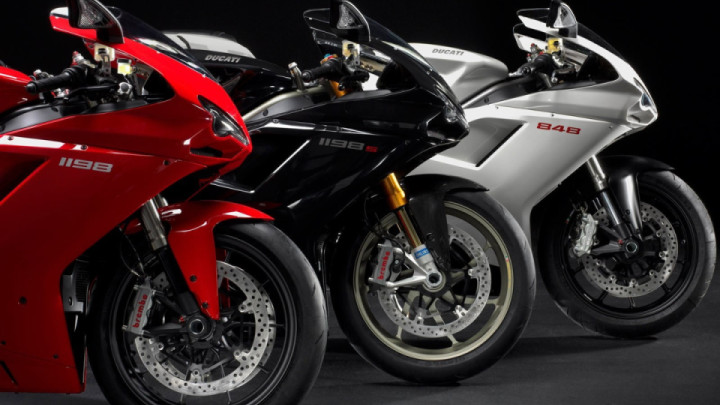
The Ducati 848 was Ducati’s middleweight superbike from 2008 to 2013, created as the smaller sibling to the 1098 and, later, the 1198. It replaced the long-running 749 and did far more than simply reduce capacity in a larger bike. The 848 marked a shift in how Ducati approached the class: instead of building a compact, sometimes divisive alternative in the image of the Pierre Terblanche-era 749/999 family, the company gave its junior superbike the same visual language, layout, and much of the same hardware as its flagship V-twin. That decision made the 848 one of the most accessible modern Ducati superbikes, but also one of the clearest expressions of the brand’s late-2000s priorities: low weight, race-bred chassis geometry, desmodromic V-twin character, and styling that tied the whole range together.
Although it sat below the bigger model in price and outright performance, the 848 was never a soft option. It was aimed at riders who wanted a serious sports motorcycle without the intimidation, running costs, or physical demands of a litre-class Ducati. In period it was also important because it arrived when the middleweight sports-bike market was changing. Japanese 600cc inline-fours still dominated sales and club-level track use, but Ducati’s answer was not another high-revving four-cylinder rival. The 848 instead offered a lighter, torquier, twin-cylinder alternative that occupied its own niche between the supersport and superbike classes.
Why Ducati created it
To understand the 848, it helps to look at the bikes around it. Ducati 749 had been respected for its chassis and front-end feel, but the 749/999 family split opinion on styling and never matched the commercial affection enjoyed by the earlier 916-derived line. When Ducati introduced the Ducati 1098 for 2007, it consciously brought the superbike range back toward a more recognisable Ducati visual identity: horizontally stacked twin headlamps, a slim tail, underseat silencers, and proportions that clearly echoed the 916/996/998 bloodline.
The 848 followed in 2008 as the middle-capacity version of that platform. The market logic was straightforward even if Ducati did not always state it in blunt terms. Not every rider wanted the speed, insurance costs, or abruptness associated with a top-flight superbike, and not every rider wanted a peaky 600cc four-cylinder either. A sub-litre Ducati twin could offer strong midrange, lower mass than the flagship model, and a price point that opened the superbike range to more buyers.
There was also a racing and brand-positioning element. Ducati’s identity was still strongly tied to V-twin sports motorcycles, and the company had little reason to chase the Japanese 600 formula directly. The 848 gave Ducati a machine for riders who wanted track-day credibility and the feel of a Bologna V-twin, but in a package that was easier to exploit on ordinary roads.
Shared architecture, different personality
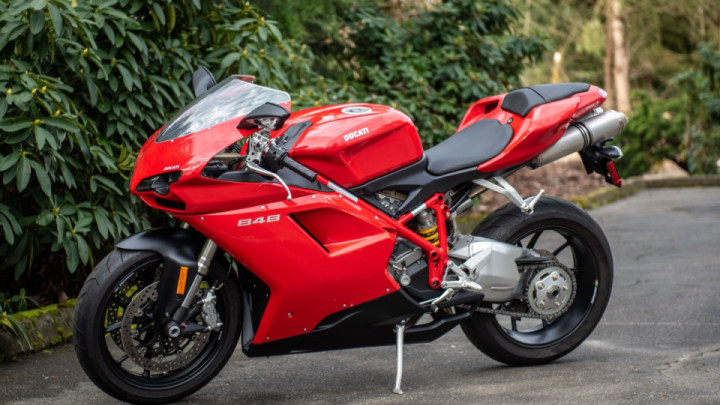
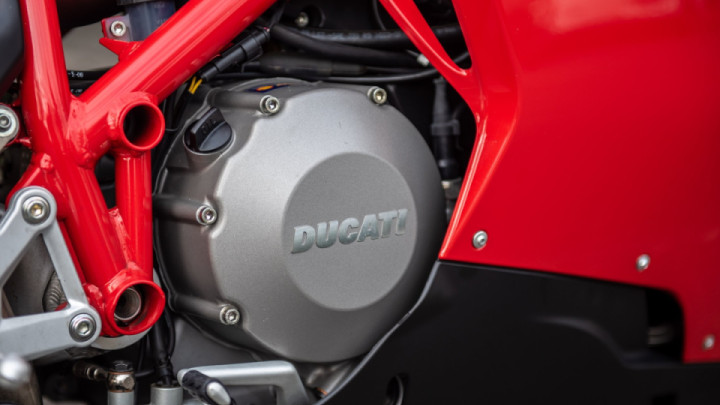
Mechanically, the 848 was closely related to the 1098. It used Ducati’s steel trellis frame, a lattice of welded steel tubes that used triangulation for stiffness while keeping the structure visually light and compact. Ducati had long favoured this layout, and on the 848 it remained central to the bike’s packaging: a narrow V-twin engine, short wheelbase, and slim waist that let the rider move around the machine easily.
Like the 1098, it used a 90-degree L-twin engine, which is Ducati’s term for a V-twin arranged so that one cylinder is near-horizontal and the other stands more upright. In this configuration, primary balance is inherently good, which helps reduce vibration without the need for a heavy balance shaft. But the layout also shapes the whole motorcycle. It makes the bike narrow between the knees, allows long intake tracts, and gives Ducati room to package the rear cylinder beneath the seat unit and fuel tank area.
The 848’s Testastretta Evoluzione engine displaced 849 cc. “Testastretta” refers to the narrow-angle cylinder-head design introduced on earlier Ducati performance twins; in broad terms, it was a way of improving combustion-chamber shape and breathing. The Evoluzione form used in the 848 was a development of the larger superbike motor rather than a carry-over from the 749. Bore and stroke were substantially oversquare, reflecting the engine’s sporting intent, and Ducati quoted output figures around the mid-130 horsepower range at the crank for early versions, with market and measurement differences depending on year and homologation standard.
That headline figure mattered less than the way the engine delivered it. Contemporary road tests generally agreed that the 848 felt friendlier and more linear than the 1098, especially away from a racetrack. It still had the familiar Ducati traits of the period: noticeable engine braking, some low-speed lumpiness if the fuelling was not perfectly set up, and a preference for being ridden with commitment rather than dawdled through traffic. But compared with the bigger bike, it revved more freely, was less likely to overwhelm the rear tyre on corner exit, and let riders use more throttle more often.
Engine details and transmission
The engine used liquid cooling, electronic fuel injection, four valves per cylinder, and Ducati’s desmodromic valve actuation. In a desmodromic system, the valves are not only opened by camshafts but also mechanically closed by a second cam profile and rocker arrangement, rather than relying on conventional valve springs alone. Ducati’s long-term argument for the layout centred on valve control at high engine speed, though by the 848 era the system also remained a strong part of the brand’s technical identity.
A six-speed gearbox and wet multiplate clutch were fitted. The wet clutch is worth noting because it distinguished the 848 from the dry-clutch mystique associated with many earlier Ducati superbikes. For some traditionalists, that removed part of the theatre. For everyday use, though, it made practical sense: it was generally quieter, less fussy in traffic, and easier to live with. The 848 was a modern Ducati superbike that didn’t insist on every old Ducati habit.
Final gearing and fuelling calibration played a large role in how the bike felt. Period testers often noted that, despite its relative friendliness, it was still not especially happy below urban road speeds, particularly in hotter conditions or where emissions-driven mapping leaned out low-throttle response. Some owners later addressed this with exhaust and ECU changes, but it is important to separate modification culture from factory specification. In standard form, the 848 was better on open roads than in stop-start traffic.
Chassis and suspension
The chassis was one of the 848’s strongest selling points. Ducati gave it much of the same cycle-parts philosophy as the 1098: a tubular steel frame, Showa suspension on the standard bike, a single-sided swingarm, and powerful Brembo brakes. It looked expensive because much of it was expensive. More important, it gave the smaller bike genuine superbike hardware rather than a visibly cost-reduced setup.
At the front sat a fully adjustable upside-down fork. An upside-down, or inverted, fork places the larger-diameter outer tube at the top and the lighter inner tube lower down, which can improve rigidity at the triple-clamp area and reduce unsprung mass slightly depending on the design. At the rear, a fully adjustable monoshock worked through a rising-rate linkage. That linkage changes the suspension leverage ratio as the swingarm moves, helping the rear suspension remain supple over smaller movements while resisting bottoming under larger loads.
The basic geometry and weight distribution gave the 848 sharp responses, but not the nervousness some riders associated with more extreme middleweights. Independent tests in period often described it as stable, planted, and accurate, with front-end feedback that encouraged late braking and committed corner entry. It was not especially plush. The suspension could feel firm on broken roads, and like many focused sports bikes of the period, setup mattered. But the chassis was one of the main reasons the 848 was often considered easier to ride quickly than its bigger stablemate.
Brembo brakes, with radial-mounted front calipers on large discs, provided the kind of stopping performance expected from a serious Italian superbike. “Radial-mounted” means the caliper bolts run parallel to the disc radius rather than perpendicular to it, a layout that can improve mounting rigidity and makes it easier to accommodate different disc sizes in racing use. On the road, what mattered was feel. Period reviews generally praised the 848’s braking power and front-end confidence, though sharper throttle transitions and engine braking still demanded a measured hand when cornering smoothly.
What it was like to ride
The 848’s reputation rests on a useful contradiction. It was undeniably a focused sports motorcycle, with low bars, rear-set footpegs, a committed riding position, and heat typical of a tightly packaged Ducati twin. Yet among Ducati superbikes of its day, it was often judged the more exploitable and satisfying road bike.
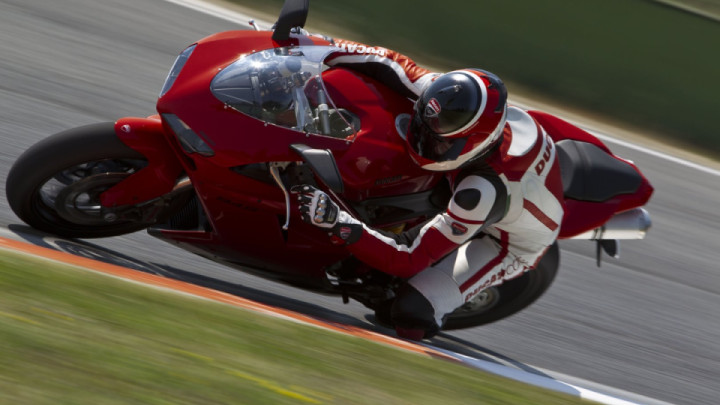
Compared with the 1098, the smaller engine’s output was easier to use, and the lighter overall package asked less of the rider in fast direction changes. Testers often found that the 848 rewarded smooth, precise inputs. It turned accurately, held a line well, and gave enough front-end feel to encourage confidence. On a flowing road or track, it could be ridden hard without the sense that the engine was always threatening to overpower the chassis or the rider’s judgement.
That did not make it relaxed. Around town, the riding position loaded the wrists, the steering lock was limited, and the underseat exhaust contributed to heat build-up. Low-speed fuelling on some bikes drew criticism, especially where emissions calibration dulled the first small throttle openings. These were familiar Ducati superbike traits rather than unique flaws. The point is that the 848 reduced them compared with the 1098; it did not remove them.
On track, the bike’s balance often drew more praise than its outright speed. Riders moving up from 600cc inline-fours could find the V-twin delivery unusual at first, particularly the engine braking and corner-exit pulse, but many also found that the broader midrange reduced the need for constant gear changes. Riders stepping down from litre bikes often appreciated being able to use more of the engine more of the time. That is a large part of why the 848 developed such a loyal following among track-day riders.
Design, ergonomics, and equipment
Visually, the 848 was almost inseparable from the 1098 to the casual eye, and that was deliberate. Ducati wanted its middleweight to look like a full member of the superbike family, not a lesser relation. The narrow nose, slab-sided fairing sections, underseat silencers, and single-sided swingarm all carried strong Ducati superbike cues. For many buyers, that mattered. The 848 looked like the bike people had on their wall posters, just with a more manageable engine.
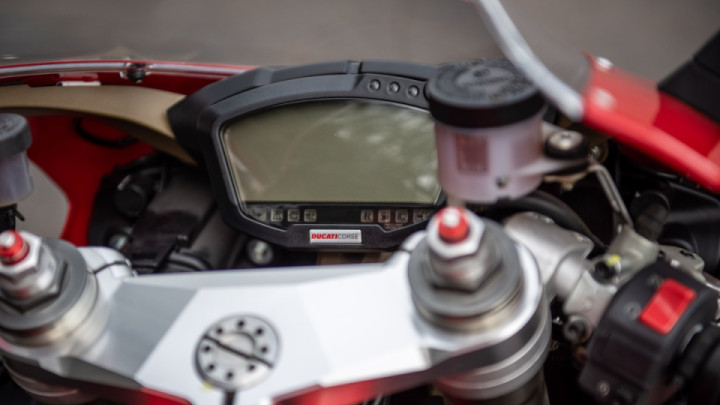
The cockpit was straightforward and compact. Instruments combined analogue and digital elements in period Ducati fashion, and the bike’s overall equipment reflected the late-2000s superbike norm rather than a luxury brief. Electronics were limited by later standards. There were no contemporary rider aids of the sort that became common in the following decade: no lean-sensitive traction control, no riding modes, no semi-active suspension. ABS was not a defining part of the early 848 story. This was still a largely mechanical performance bike, and its appeal today partly lies there.
How the range evolved
The original 848 remained in Ducati’s line-up with relatively modest changes before a more substantial update arrived as the 848 EVO for the 2011 model year in many markets. Ducati’s published figures for the EVO showed higher peak output than the earlier bike, along with chassis and braking revisions. The engine received changes that included revised cylinder heads and other detail updates intended to improve breathing and performance.
The EVO also gained stronger braking hardware, with monobloc Brembo front calipers in place of the earlier setup, and steering geometry changed slightly. Contemporary tests generally found the EVO sharper and more aggressive than the original 848. Some welcomed the extra urgency; others felt the standard early bike had been the sweeter road package. That split tells you something important about the model. The 848 was at its best when its chassis precision and V-twin character stayed in balance with real-world usability.
Ducati also offered the 848 EVO Corse Special Edition, which added higher-spec suspension and race-replica styling. As usual with Ducati special versions of the period, the visual drama was part of the attraction, but the mechanical changes were real enough to matter for riders who used the bike hard on circuit.
The final development of the line was the Ducati 848 Streetfighter, which used the same basic engine in naked form, and the related 899 Panigale, which effectively replaced the 848 superbike when Ducati moved the middleweight sport role into the Panigale family. The 899 was a very different proposition in engineering terms, with a monocoque-style chassis concept and far more electronics. It did not feel like a direct continuation of the old steel-trellis era, because it wasn’t.
Reliability, maintenance, and known issues
Like most modern Ducatis, the 848’s reputation depends heavily on maintenance history. A well-kept bike is a very different prospect from a neglected one. The desmodromic valvetrain requires scheduled inspection and adjustment, and service costs were one reason the 848 appealed less to casual buyers than a Japanese 600. Timing-belt replacement intervals also mattered. Anyone buying one new in period, or used now, ignored the service schedule at their peril.
That said, the 848 was not generally regarded as a fragile exotic if maintained properly. Its wet clutch removed one source of old-style Ducati fussiness, and many owners considered it less temperamental in daily use than older high-performance twins from the company. Common ownership themes include heat, firm ergonomics, and sensitivity to battery condition, all familiar on Ducati sports bikes of the era.
Reports of regulator/rectifier charging issues, exhaust-valve concerns, and fuelling irritations do appear in owner communities, but these need context. Some are age-related electrical problems rather than model-defining defects. Some are tied to modified bikes. Some vary by year and market. The safest general conclusion is that the 848 rewards specialist care and punishes neglect, but does not stand out as unusually troublesome by Ducati superbike standards of its time.
In the United States, Ducati issued recall actions affecting certain examples and years of the 848 family, though these did not necessarily apply identically across all markets. Buyers checking a used machine should verify outstanding recall work by VIN rather than assuming a global pattern. Market-specific recall databases remain the right source here.
Competitors and reception
The 848 occupied an unusual place in the market because it was not a direct one-for-one rival to most 600cc supersports. Bikes such as the Yamaha YZF-R6, Honda CBR600RR, Suzuki GSX-R600, and Kawasaki ZX-6R were lighter in engine capacity, often cheaper to buy and run, and usually happier in everyday traffic. They also made their performance in a different way, relying on high revs and close-ratio urgency rather than V-twin torque.
The Ducati offered something those bikes did not: superbike scale, strong midrange, premium cycle parts, and the feel of a large-capacity twin without the full demands of a 1098. That gave it a slightly awkward position on paper, because it was neither a budget middleweight nor the fastest bike in open-class terms. On the road, though, many testers found the concept convincing. The 848 was widely praised for combining serious performance with a level of approachability rare in Ducati superbikes of the period.
Press reaction at launch was generally strong. Reviewers liked the balance between engine, chassis, and price, and many thought it made more sense on public roads than the bigger model. Criticism focused on predictable areas: a committed riding position, heat, occasional fuelling roughness, and the usual Ducati servicing costs. None of that stopped the bike becoming one of the best-regarded modern middleweight Ducatis.
Place in Ducati history
The 848 sits at an interesting point in Ducati’s superbike timeline. It belongs to the last phase in which the company’s sports twins still relied on the familiar recipe of steel trellis frame, underseat exhaust, compact fairing, and relatively simple electronics. Soon after, the Panigale family changed the engineering direction of Ducati’s superbikes far more dramatically.
That makes the 848 more significant than its displacement suggests. It was one of the clearest final expressions of the classic modern Ducati formula before the brand moved into a new era of chassis design and electronic control. It also showed that Ducati could build a superbike that kept the company’s essential character while shedding some of the intimidation associated with its larger twins.
Today, that is a large part of the model’s appeal. The 848 offers the look and feel of a late analogue Ducati superbike, but in a package many riders still consider the sweet spot of the range. Not the most famous. Not the fastest. But often the one that makes the most sense once the road starts to turn.