Ducati Diavel 1200 About - Overview, History & Details
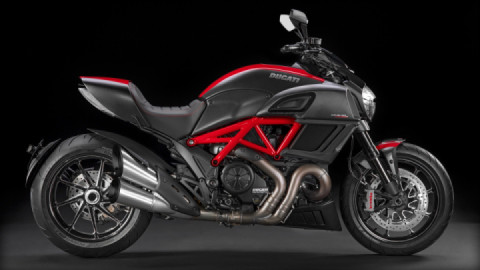
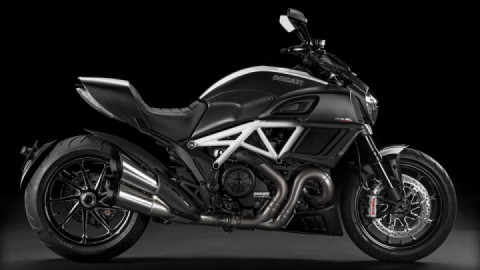
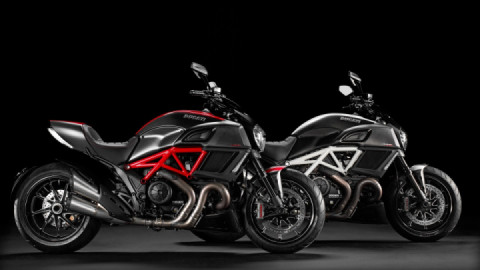
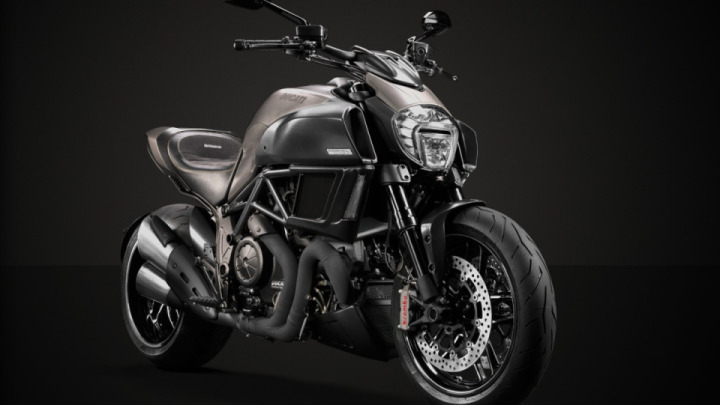
The Ducati Diavel 1200 arrived for the 2011 model year as a motorcycle that made sense only after you understood what Ducati was trying to do. It was not a cruiser in the American V-twin tradition, not a naked bike in the usual European mould, and not a power cruiser in the old sense either. Ducati built it around a simple question: could the company take superbike-derived engineering, wrap it in low-slung, muscular styling, and attract riders who liked the stance of a cruiser but had no interest in cruiser performance? The result was one of the most unusual mainstream Ducatis of its period, a machine that combined the 1198 superbike’s Testastretta engine architecture with a very broad rear tyre, long wheelbase, upright ergonomics, and electronics that were advanced for the class when it appeared.
Over its life, the Diavel 1200 became important for more than its styling. It expanded Ducati’s audience, sold in markets where traditional sport bikes were becoming harder to live with, and showed that the company could build a high-performance motorcycle outside its established superbike, Monster, and Multistrada families. It also set the pattern for the later XDiavel and, in a different way, for Ducati’s broader move toward category-crossing motorcycles.
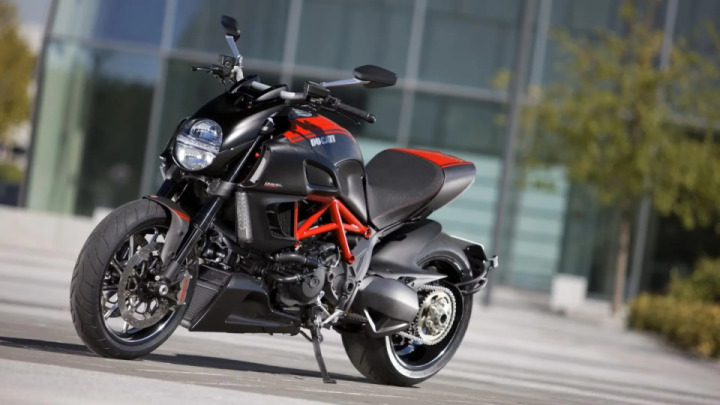
Why Ducati created it
The Diavel was launched at a time when the large-capacity motorcycle market was fragmenting. Traditional supersports were still central to Ducati’s image, but they were no longer the only profitable or growing part of the business. Riders in Europe and North America were buying more upright roadsters, adventure-tourers, and niche machines that promised strong performance without racetrack ergonomics. Ducati had already widened its appeal with the Multistrada 1200, which showed that a sport-focused Italian brand could succeed in a less conventional segment if the engineering remained credible.
There was also a gap in the market between heavyweight cruisers and performance nakeds. Yamaha had explored that space with the Yamaha VMAX, and Triumph with the Triumph Rocket III, but Ducati’s answer was different. Instead of relying on massive displacement and straight-line novelty alone, it aimed for the handling, braking, and electronic sophistication expected of a modern Ducati. The company did not present the Diavel as a direct copy of any existing formula. Period interviews and launch material instead framed it as a motorcycle intended to unite “power cruiser” presence with genuine sporting ability.
That made the Diavel a risky product. Ducati’s identity had long been tied to V-twin sport machines, trellis frames, desmodromic valve gear, and a fairly committed riding position. A low, long, 240-section-tyred bike seemed to contradict much of that. Yet the gamble was deliberate: if Ducati could make such a shape steer properly and accelerate like a litre-class naked, it could sell a motorcycle to people who would never buy a Panigale or even a Monster.
The engineering concept
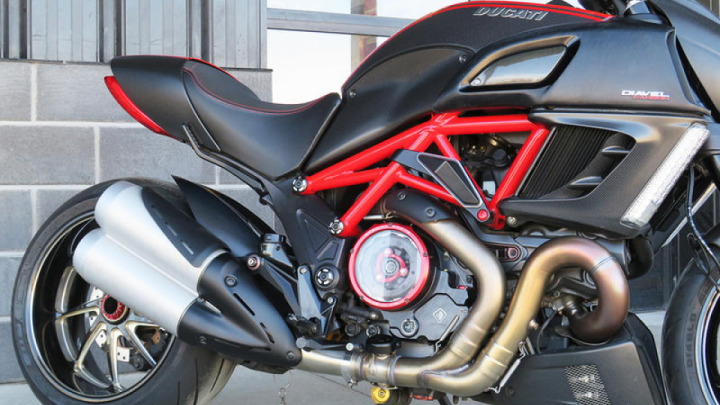
The Diavel 1200 was built around a familiar Ducati idea adapted to an unfamiliar format. Rather than use a full conventional frame, Ducati employed a tubular steel trellis structure attached to the cylinder heads, using the engine as a stressed member. In simple terms, the engine carried part of the structural load instead of sitting passively inside a large cradle frame. That helped keep the chassis compact and avoided some of the weight penalty that might have come with trying to package cruiser proportions around a separate heavy frame.
Its proportions still forced compromises. The wheelbase was much longer than a Monster’s, the seat was low, and the rear tyre was exceptionally wide for a Ducati road bike. A 240-section rear tyre gives a bike much of its visual effect, but it also changes the steering behaviour. With a tyre that wide, profile shape becomes critical; Ducati worked with Pirelli on a custom-section rear tyre intended to preserve neutral steering rather than the reluctant turn-in that often affects style-led power cruisers.
The suspension layout was conventional in concept but not in intent: upside-down forks at the front and a preload- and rebound-adjustable monoshock at the rear. Higher-spec versions added more premium hardware, but even the standard bike was clearly engineered to perform beyond its appearance. Brembo brakes, sport-oriented geometry within the limits of the concept, and relatively high-quality wheels all signalled that Ducati wanted the Diavel to be taken seriously as a rider’s motorcycle, not just a styling exercise.
Testastretta 11° engine and transmission
At the Diavel’s centre was Ducati’s 1,198 cc Testastretta 11° L-twin, a development of the company’s four-valve desmodromic twin rather than an all-new cruiser engine. “Testastretta” refers to the narrow-angle cylinder-head design used on Ducati’s high-performance twins, while the “11°” designation describes the degree of valve overlap, reduced from more extreme superbike settings to improve tractability, emissions compliance, and road manners. In practice, that meant Ducati softened the raciest edges of the 1198 family engine without turning it into a lazy low-rev motor.
Quoted output depended on year and market, but early Diavel 1200 versions were generally claimed at around 162 hp, with torque a little under 130 Nm. Those numbers mattered less than the way the engine delivered them. Contemporary road tests usually found that the Diavel had far more top-end than any traditional cruiser and stronger midrange than most superbike-based nakeds. It did not need to be revved like a supersport to feel quick, but it also did not run out of breath early in the way many low-revving V-twins did.
The six-speed transmission and chain final drive were another clear break from cruiser convention. Many big cruisers in the Diavel’s visual neighbourhood used belts or shafts and wider-ratio gearboxes aimed at low-stress torque delivery. Ducati instead kept a sport-bike layout. That helped preserve direct throttle response and mechanical efficiency, though it also meant more abrupt driveline reactions at very low speeds than riders coming from softer cruisers might have expected.
Several period tests praised the engine’s forceful acceleration and flexibility, but some also noted that early fuelling at small throttle openings could be imperfect, especially in lower gears or urban riding. That criticism was not unique to the Diavel; many Ducatis of the era were still refining the transition from closed to partially open throttle under emissions constraints. Even so, most testers agreed that once moving at ordinary road speeds, the engine gave the bike its essential character: not lazy, not relaxed, but muscular and surprisingly urgent.
There was a practical side to the Testastretta 11° specification too. Compared with older high-maintenance Ducati performance twins, this engine came from a period when the company was extending service intervals and making ownership less intimidating. Desmodromic valve service was still a specialist job, but the Diavel belonged to a generation in which Ducati was trying to prove that everyday usability and high performance no longer had to sit at opposite ends of the range.
How it rode
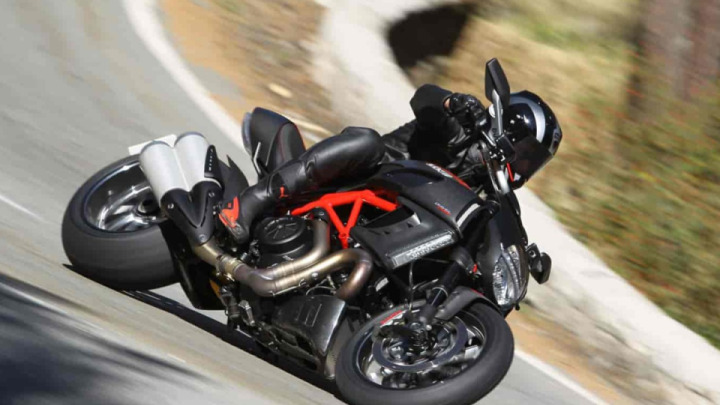
The Diavel’s reputation was built on the fact that it worked better than it looked as though it should. On paper, a long, low motorcycle with a huge rear tyre and forward-biased visual mass ought to have felt heavy, slow-steering, and clumsy on a technical road. Period road tests generally found the opposite. It was not as quick to change direction as a true super-naked, and no amount of chassis tuning could disguise the basic geometry and tyre width, but it steered with much less effort than riders expected and held a line well once set into a corner.
That distinction matters. The Diavel was not trying to feel like a Monster with a dramatic body kit. It carried more wheelbase, more visual bulk, and a different rider triangle. What impressed journalists at launch was that Ducati had preserved enough front-end feel and enough suspension control to make a bike of this shape genuinely enjoyable on fast roads. Ground clearance was also better than many riders assumed from the silhouette, so the bike could be ridden briskly before hard parts touched down.
Braking was another part of the surprise. Brembo radial hardware gave the Diavel far stronger and more precise stopping power than the cruiser norm, and ABS was available from the start on relevant versions. Riders moving from heavy custom-style machinery often remarked on the difference immediately. But there was a trade-off: low-speed town riding could feel less natural than the bike’s relaxed seating position suggested. The combination of a powerful engine, sporty throttle connection, and broad rear tyre asked for a little more care in traffic and during tight manoeuvres than a softer, lower-output cruiser would.
So the Diavel’s chassis did not erase physics. It simply bent expectations. It was fast, stable, and competent enough to embarrass motorcycles that looked more overtly sporty, while still feeling physically substantial in a way some Ducati buyers actually wanted.
Ergonomics and everyday use
One reason the Diavel reached beyond Ducati’s traditional customer base was that it was easier to live with than the company’s superbikes. The seat height was low, the bars were wide and upright, and the rider did not carry body weight on the wrists in the usual sport-bike manner. For shorter riders, that low seat and broad bar could make the bike immediately less intimidating than its power figures suggested.
At the same time, this was not an all-day touring platform in the mould of a big adventure bike or luxury cruiser. Wind protection was limited on the standard machine, passenger accommodation was acceptable rather than generous, and the seat drew mixed reviews over distance. The riding position put the rider “in” the bike more than “on top of” it, which suited the styling and made hard acceleration feel dramatic, but it was less ideal for frequent long motorway runs than a fully faired machine.
Fuel capacity and range were reasonable rather than class-leading. The Diavel was also narrower through the middle than its rear view suggested, because the visual mass sat mostly in the tail section and rear wheel area. That helped at standstill and in traffic. Heat management, however, was a recurring Ducati trait of the period: some owners and testers noted noticeable engine heat around the seat and inner thighs, especially in slow urban use or hot climates.
As a daily motorcycle, then, it was better than its image implied but not quite as easygoing as its stance promised. Riders who came to it expecting a laid-back custom often found it too alert. Riders who wanted a high-performance Ducati without clip-ons often found that tension exactly right.
Styling, equipment, and electronics
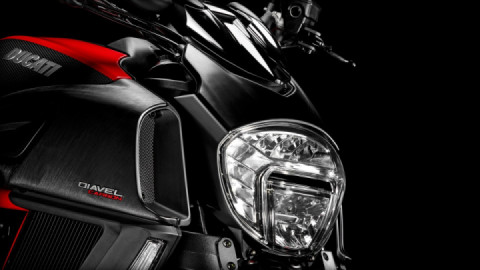
The Diavel’s styling did a large part of the commercial work. The bike’s visual identity depended on a low headlight assembly, a heavily sculpted fuel tank cover, a minimal tail, and that vast rear tyre. LED lighting and a side-mounted radiator arrangement helped keep the bodywork compact. The tail section looked especially dramatic because Ducati hid a great deal of apparent mass high and rearward, making the bike appear short and stretched at the same time.
Equipment levels were modern for the early 2010s. Ducati Traction Control and riding modes were central to the package, and their presence was important because the Diavel was aimed partly at riders crossing over from less performance-oriented motorcycles. In the standard configuration, electronics helped make a very powerful twin less intimidating in poor grip or abrupt-throttle situations. This was not yet the IMU-driven electronics age, but for its launch period the Diavel was well equipped.
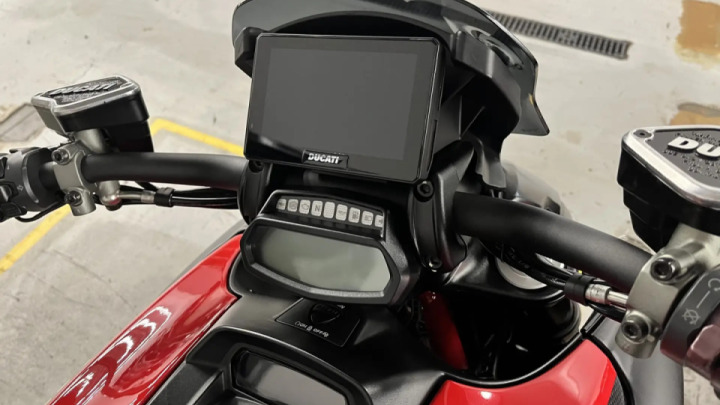
Instrumentation was fully digital and in keeping with Ducati’s move toward more premium-looking dashboards, though some riders found the interface less intuitive than later systems. The higher-spec Diavel Carbon added lighter wheels and carbon-fibre trim, while also sharpening the bike’s visual connection to Ducati’s sportier models. Those changes did not alter the underlying concept, but they nudged the bike a little further from cruiser territory and a little closer to the premium performance-naked audience.
Model development and major updates
The first-generation Ducati Diavel 1200 ran from 2011 until the major update for 2015, before the 1200 was eventually replaced by the Diavel 1260 for 2019. Across that run, the basic formula stayed consistent: Testastretta 11° L-twin, steel trellis construction, low seat, upright bars, and the visual theatre of the 240 rear tyre. But Ducati refined the details.
The original 2011 launch line-up centred on the standard Diavel and the Diavel Carbon. Depending on market, there were also special appearances or trim-based variants, including darker cosmetic versions in later years. The Carbon was not merely decorative. Its forged or lighter wheels (specification varied by year), reduced visual bulk, and more premium finish made it the version many road testers preferred.
The 2015 update was significant without changing the basic identity of the bike. Ducati revised the styling, especially around the front and side surfaces, updated the engine with the Dual Spark version of the Testastretta 11°, and changed some equipment details. Dual Spark, as the name suggests, used two spark plugs per cylinder to improve combustion efficiency, emissions performance, and low-speed running. Claimed output stayed in the same broad region, but Ducati also aimed for smoother response and cleaner operation.
That facelifted machine looked more polished and slightly less raw than the original. Whether it looked better is a matter of taste; some riders preferred the first version’s harder, more stripped visual impact. Mechanically, though, the later 1200 was usually seen as the more mature motorcycle. The updates did not turn it into a soft bike. They simply addressed some of the rougher edges while preserving the basic mixture of speed and theatre.
By the end of the 1200 era, Ducati had proved the concept well enough to split the family. The cruiser-leaning Ducati XDiavel took the feet-forward, belt-drive interpretation further from 2016, while the eventual Diavel 1260 replaced the 1200 as the main line and moved to the larger DVT-based engine architecture.
Variants and market position
The Diavel 1200 occupied an awkward but productive place in Ducati’s range. It was more expensive and more specialised than a Monster in many markets, less practical than a Multistrada, and less obviously tied to racing than a superbike. Yet that was also its strength. Buyers did not choose it because it was the logical answer to a functional brief. They chose it because no rival combined the same visual attitude with the same level of sporting credibility.
In Ducati showrooms, the closest internal comparison was often the Monster 1200 once that model appeared, because both offered upright ergonomics and large-capacity Ducati twin power. But the two machines delivered it differently. The Monster remained the more conventional naked roadster, generally lighter-feeling and less theatrically styled. The Diavel offered a lower seat, more visual drama, and a more distinctive niche identity.
Against outside rivals, the comparison depended on what the buyer cared about. The Yamaha VMAX was more extreme in engine configuration and straight-line image; the Triumph Rocket III was larger, torquier, and more overtly muscle-cruiser in concept; high-performance nakeds such as KTM’s Super Duke family were lighter and sharper, but lacked the Diavel’s low, custom-influenced presence. Ducati was effectively selling a category of one, or at least as close to that as a major manufacturer could get.
Reliability, maintenance, and known issues
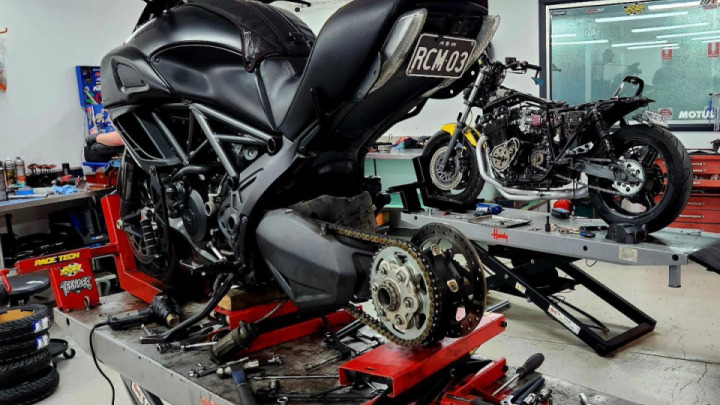
The Diavel 1200’s basic engine family was well known by Ducati standards, which helped. It was not a fragile exotic in the old stereotype, but neither was it a low-maintenance appliance. Regular belt replacement, desmodromic valve-clearance checks at the specified intervals, and careful attention to battery condition mattered. A neglected Diavel could become expensive quickly, especially once labour-intensive service work and premium parts entered the picture.
Owner reports and specialist workshops have commonly pointed to issues that are less about a fatal design flaw than about age, heat, and electronics complexity. Early bikes could show fuelling snatch, especially if modified with non-standard exhausts or poorly sorted maps. Battery weakness could create misleading electrical symptoms, something familiar across many Ducatis with high-compression twins and electronics-heavy systems. Rear brake effectiveness has also been a recurring Ducati talking point of the era, though the severity and exact cause can vary by model and maintenance state, so it is better treated as a point to inspect than a universal defect.
There were also market-specific recall and service actions over the model’s life. As with many global motorcycles, these did not always apply uniformly in every country or to every production run, and buyers should check VIN-specific records in the relevant market rather than relying on general claims copied online. On an older Diavel, condition and service history matter more than brochure specification. A fully documented bike that has had proper dealer or specialist attention is usually a better bet than a cosmetically cleaner but poorly maintained example.
The rear tyre is part of the ownership story as well. That 240-section tyre is central to the bike’s identity, but it limits choice more than a conventional sport-touring size and can affect running costs. Tyre profile also plays a real role in steering feel, so worn or unsuitable replacements can make a good Diavel feel worse than it should.
Press and owner reception
Contemporary press reception was strong precisely because expectations were low. Many journalists approached the Diavel assuming that its styling brief would overwhelm its chassis. Instead, most period tests praised the way Ducati had made a visually extravagant motorcycle ride with real competence. Reviewers usually singled out the engine, braking performance, and surprisingly neutral handling. They also noted its contradictions: a bike that looked like a boulevard special but could cover a fast back road at serious speed.
The common criticisms were just as consistent. Some testers found the low-speed throttle response imperfect, some thought the ride could feel firm on poor surfaces, and many accepted that despite the relaxed silhouette, this was not a true long-distance cruiser. That did not amount to a rejection of the concept. In most markets, the Diavel was judged successful because it met its own brief rather than someone else’s.
Owners tended to divide into two groups. Some came from sport bikes and liked the more upright ergonomics without giving up acceleration or premium componentry. Others came from customs or muscle bikes and discovered that the Ducati demanded more attention, offered less traditional laid-back feel, but returned much sharper performance. The people it disappointed were usually those who wanted it to be one of those things exclusively.
Its place in Ducati history
The Diavel 1200 mattered because it proved Ducati could stretch its identity without losing it. Earlier range expansions had still fit recognisable Ducati categories: sport bikes, naked bikes, superbike-derived tourers. The Diavel was different. It was a style-led motorcycle that still had to satisfy sceptical riders, and it largely did. More importantly, it sold well enough to justify continuation, refinement, and eventually a second branch of the family.
That influence can be seen in two ways. First, it gave Ducati confidence to pursue more niche-rich, design-distinct motorcycles rather than treating every model as a variation on racing pedigree. Second, it showed that Ducati customers were willing to accept unfamiliar formats if the engine, brakes, chassis quality, and overall sense of intent still felt authentically Ducati.
For that reason, the Diavel 1200 remains one of the clearest examples of Ducati solving a problem it had created for itself. The company wanted a motorcycle with cruiser stance but no cruiser lethargy, custom-bike presence without custom-bike chassis limits, and superbike blood without superbike discomfort. The answer was never going to be tidy. It was a low, wide, aggressively styled V-twin that behaved more like a performance roadster than it had any right to. That tension is the whole point of the Diavel 1200, and it is why the early bikes still make sense today.