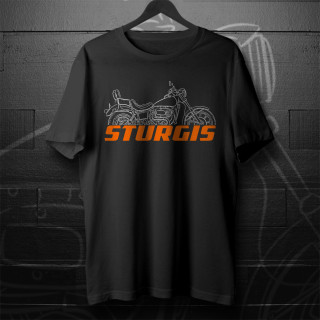
Harley-Davidson Sturgis FXB About - Overview, History & Details
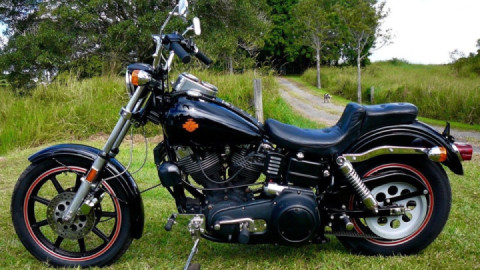
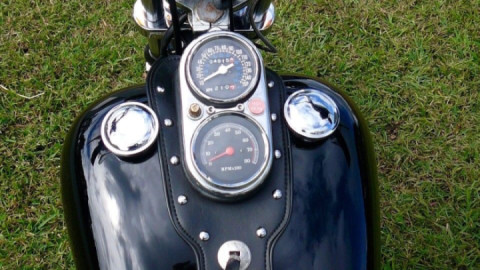
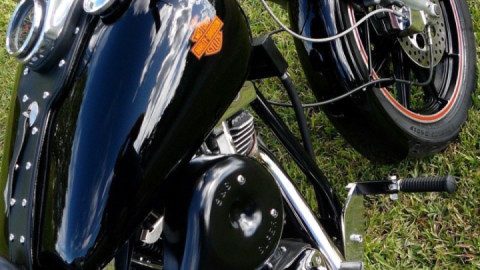
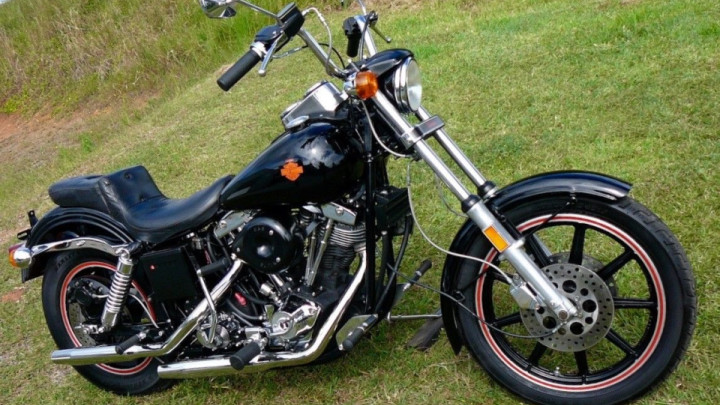
The Harley-Davidson Sturgis was a factory custom version of the FXB Low Rider sold for the 1980 and 1981 model years, created at a moment when Harley-Davidson was trying to hold on to its performance image while also responding to the late-1970s boom in customised street bikes. Despite the name, it was not a distinct long-running model line in the way that Sportster, Electra Glide, or Softail became. It was a short-lived, dark-finished, belt-drive V-twin that mattered because it previewed ideas Harley would use much more widely later: blacked-out styling, factory custom presentation, and toothed-belt final drive on a big twin.
Its historical interest comes from that mix of image and engineering. The Sturgis looked deliberately lean and aggressive by the standards of its day, but beneath the cosmetics it also introduced a technical change that would outlast the model itself. In that sense it was both a period piece and a signpost.
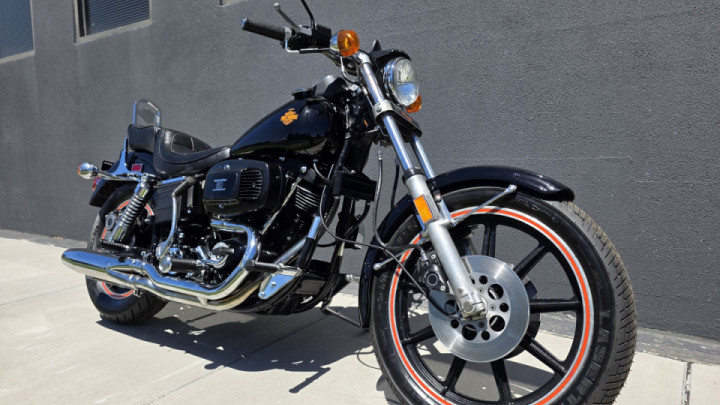
Why Harley-Davidson created it
By the end of the 1970s, Harley-Davidson was in a difficult position. The company was still producing motorcycles with a strong identity and a loyal following, but it was under pressure from imported Japanese machines that were faster, more reliable, and often better finished. At the same time, the American market had developed a taste for factory customs: motorcycles that arrived from the showroom already styled to resemble owner-modified bikes.
Harley had helped create that market with the 1977 FXS Low Rider, a machine that brought custom cues such as cast wheels, stepped seat styling, drag-style bars, and a lower stance into regular production. The FXB Sturgis followed that logic a step further. It took the basic FX layout and gave it a darker, more purposeful look, while also serving as the launch platform for a new final-drive system.
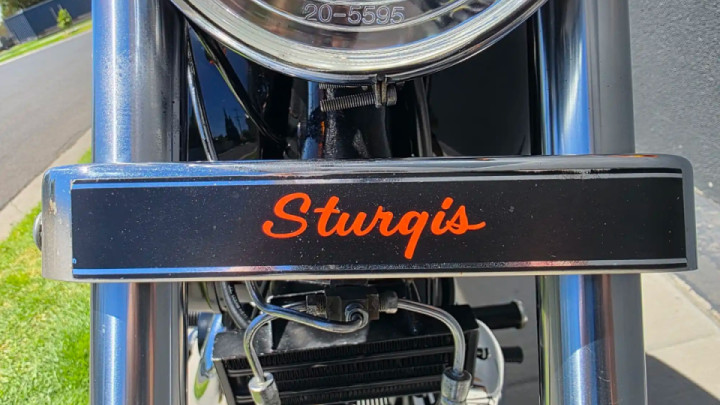
The name referred to Sturgis, South Dakota, home of the Sturgis Motorcycle Rally, which by then had long been associated with American V-twin culture. Harley did not invent that connection; it used a place already loaded with meaning for its core audience. Naming the bike Sturgis signalled attitude more than touring intent. This was meant to sound raw, custom, and American.
The engineering idea beneath the styling
At a glance, the Sturgis could look like a cosmetic special. It was more than that, but only up to a point. The underlying machine remained part of Harley-Davidson’s shovelhead-era FX family: a rubber-mounted engine was still years away, the basic chassis architecture was familiar, and the riding experience was rooted in the company’s established big-twin formula. What changed was the presentation and one major mechanical feature.
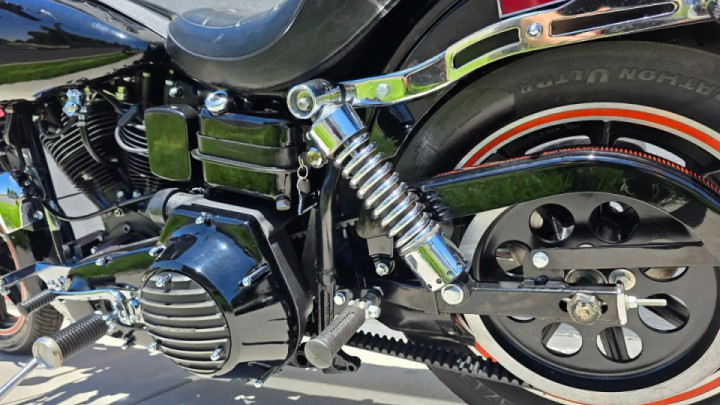
The key technical distinction was its toothed-belt final drive. Traditional Harley big twins of the period generally used chain final drive. The Sturgis replaced that with a synchronous belt system. In simple terms, a toothed belt meshes with matching pulleys rather than relying on metal links engaging with sprockets. The potential advantages were cleaner running, less routine adjustment, no fling of chain lubricant, and quieter operation. The system also fit the idea of a premium factory custom: modern, tidy, and less messy to live with.
That did not mean it was entirely free of compromise. Early belt systems were still proving themselves in big-twin use, and period riders were accustomed to chains that could be repaired or replaced with familiar parts. But Harley saw enough promise in the concept that belt drive later became a signature feature on many of its street motorcycles. The Sturgis was the experiment customers could buy.
Engine and transmission
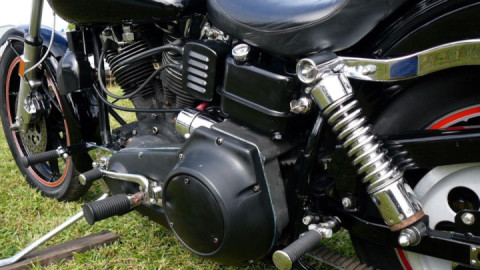
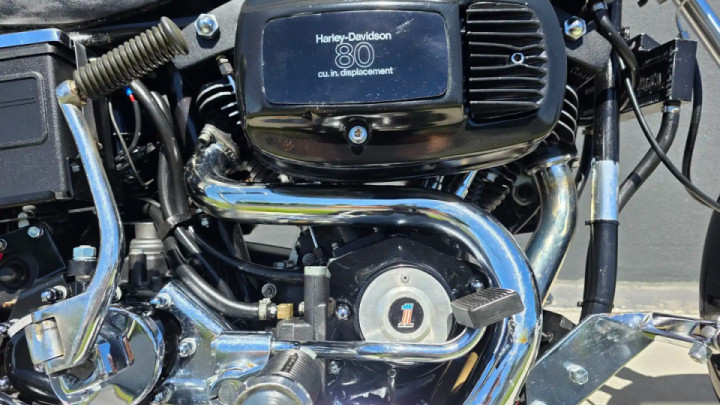
The Sturgis used Harley-Davidson’s 80 cubic inch shovelhead V-twin, equivalent to 1,340 cc. This was the company’s familiar air-cooled, 45-degree overhead-valve big twin, with the “Shovelhead” nickname coming from the shape of its rocker covers. By 1980 that engine was already well known: torquey, slow-revving, mechanically busy, and full of the pulse buyers expected from a large Harley of the period.
It was not a high-output engine by contemporary superbike standards, and Harley was not trying to make it one. The point was midrange thrust and feel rather than top-end numbers. Period road tests generally described this kind of big twin as strong off the line and satisfying in the middle of the rev range, but also marked by vibration, a relatively narrow useful power band, and a gearbox that demanded deliberate inputs rather than fingertip delicacy.
Quoted power figures for shovelhead Harleys of this period vary across sources and markets, and measured rear-wheel outputs in independent tests were often much lower than brochure numbers suggested. For understanding the Sturgis, the exact number matters less than its character: it was a large-capacity engine that delivered its performance in heavy pulses rather than a rising rush of revs. Riders coming from British twins or earlier Harleys would have found that familiar. Riders comparing it with contemporary Japanese multis would have noticed the gap in smoothness and peak speed immediately.
Transmission was through a four-speed gearbox. Even by 1980 that was beginning to look dated beside rivals with five or six ratios, but Harley’s big twin did not need close gearing to stay in its power band in normal road use. The drawback came at highway speeds and in flexibility across a wider range of conditions. A taller overall spread would have helped. So would a cleaner shift action. Neither was really the shovelhead drivetrain’s strong suit.
Chassis, suspension, and brakes
The chassis followed the established FX pattern, which blended big-twin Harley components into a package lighter and more informal than the company’s full-dress tourers. Compared with an FL model, an FX felt stripped back. Compared with Japanese performance customs of the same period, it still felt large, old-school, and mechanically substantial.
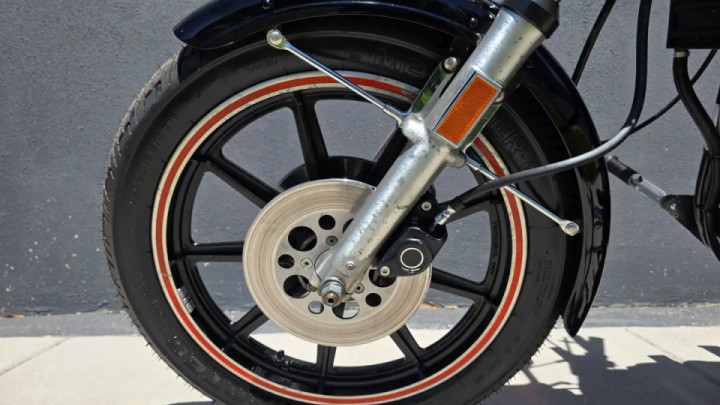
The Sturgis used cast aluminium wheels rather than traditional wire spokes, in keeping with the custom theme and the modernising intent of the package. Styling played a role here, but so did maintenance. Cast wheels also matched the machine’s darker finish and helped separate it visually from more traditional Harleys.
Suspension and braking were conventional for the era and for Harley’s range. That is another way of saying they were adequate rather than class-leading. The front end used telescopic forks, the rear used twin shock absorbers, and the overall setup favoured straight-line composure and familiar Harley road manners more than quick steering. Road tests from the period often praised FX models for their stable feel and relaxed long-wheelbase confidence, but they were rarely described as sharp handlers.
Braking performance needs similar context. Dual front discs were becoming more common in the wider market, and some imported rivals offered stronger stopping power with less lever effort. The Harley system did the job, but not with the immediacy of the best sport-oriented machinery of the time. On a heavy motorcycle with a torquey engine and a conservative chassis, that mattered.
What it was like to ride
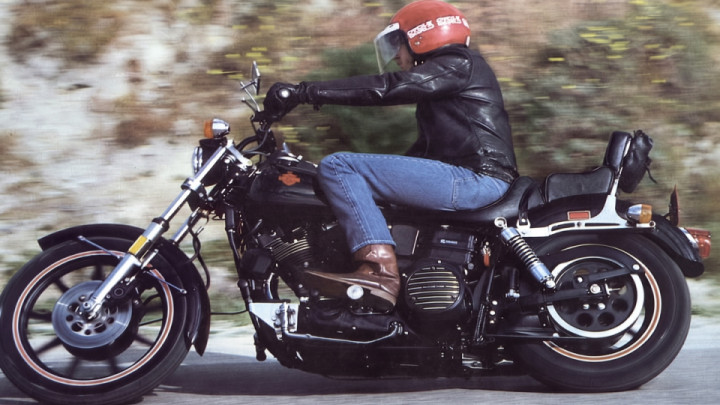
The Sturgis was built around presence and torque, not speed in the modern sense. Its engine delivered the low-frequency beat people associate with shovelhead Harleys, and the riding position reflected the factory-custom formula established by the Low Rider: lower, slightly tougher-looking, and more style-conscious than a pure touring Harley.
In use, that translated into a motorcycle that suited cruising, short blasts, and the kind of riding where the experience mattered as much as the pace. The belt drive would have made everyday ownership cleaner than on a comparable chain-driven big twin. The broad V-twin torque meant fewer gear changes than a smaller, higher-revving machine required. But there were limits that period testers did not ignore. Vibration was part of the package. Ground clearance was not generous. Steering was slower than lighter sporting motorcycles. And finish quality on Harleys of the AMF era remained a live issue in the minds of many buyers and journalists.
The Sturgis therefore occupied an unusual place. It looked like a custom, carried Harley’s outlaw-adjacent image, and offered a useful mechanical innovation, yet it still rode like a shovelhead FX. For some riders that was exactly the attraction. For others it meant the bike promised more modernity in concept than it delivered on the road.
Styling, finish, and the meaning of the blacked-out look
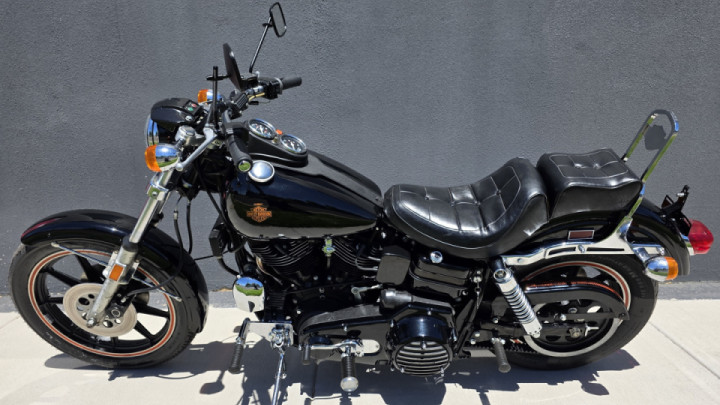
The most obvious visual feature was the black treatment. Harley-Davidson had used dark finishes before, but the Sturgis made them central to the bike’s identity. Blacked-out engine components, darker cycle parts, and restrained brightwork gave it a tougher look than the more heavily chromed Harleys many buyers expected. In later decades that approach would become common across the industry. In 1980 it still stood out.
This was not merely a paint choice. Harley was selling a mood and a tribe marker. The Sturgis looked closer to what many owners were already trying to build in garages: less parade-bike shine, more street custom attitude. That mattered because Harley’s value at the time was cultural as much as technical. Japanese makers could offer stronger measured performance. Harley could offer belonging, sound, silhouette, and a machine that already looked like part of an existing motorcycle scene.
Even so, the styling was not universally admired. Some traditionalists preferred chrome and wire wheels. Some performance-minded riders saw the Sturgis as too cosmetic. That split tells you what sort of motorcycle it was. It was not trying to settle an engineering argument. It was trying to define a style Harley could legitimately sell from the factory.
How it fit into Harley-Davidson’s range
Within Harley-Davidson’s line-up, the Sturgis sat near the FXB Low Rider rather than outside the normal family tree. It was a variant, not a separate platform. The FX Super Glide line had long served riders who wanted big-twin Harley character without the bulk of the Electra Glide and without the smaller scale of the Sportster. The Low Rider had already shown that there was money in turning that platform into a showroom custom. The Sturgis sharpened the idea with darker styling and belt drive.
That also explains why the model was short-lived. Harley did not need the Sturgis name to survive for the concept to survive. Once the factory had proved that buyers would accept belt drive and blacked-out presentation on a big twin, those ideas could migrate elsewhere in the range. The badge did its job quickly.
Production run and changes
The Harley-Davidson Sturgis is generally identified with the 1980 and 1981 model years. It is sometimes described simply as the FXB Sturgis, which is the clearest way to distinguish it from other FX-family customs. Sources broadly agree on that short production span, though minor equipment and finish details can vary in surviving examples because of market differences, dealer changes, and later owner modifications.
There was no long sequence of annual redesigns because the model did not last that long. That brevity is part of why it remains interesting. It captures Harley in transition: still selling shovelhead machinery shaped by 1970s habits, but already moving toward design and driveline choices that would define much of its later road-going identity.
Reliability, maintenance, and known issues
Any discussion of Sturgis reliability has to separate the model-specific points from the wider reputation of late shovelhead Harleys. The Sturgis did not have an entirely unique mechanical base. Many ownership concerns are really concerns about Harley big twins of the AMF years and immediate post-AMF transition period: oil leaks, inconsistent assembly quality, charging-system troubles, vibration-related loosening of fasteners, and the need for more hands-on maintenance than many Japanese rivals demanded.
The belt drive is the obvious model-specific area of interest. In principle it reduced mess and routine upkeep compared with a chain. In practice, early systems still depended on correct alignment, proper tension, and undamaged pulleys. A neglected or contaminated belt could become expensive, and roadside improvisation was not as straightforward as it was with a chain. That said, the long-term importance of Harley belt drive suggests that the company had backed a sound idea, even if early adopters were living with a newer system before it became ordinary.
Age now complicates everything. Any surviving Sturgis is a collector-age motorcycle, and current condition depends heavily on storage, maintenance history, and whether the machine still carries its original components. Modified examples are common. Some were updated over the years to improve charging, ignition, carburation, or braking. Those changes can make the bike easier to use, but they also blur the line between a preserved Sturgis and a period Harley built around Sturgis parts and styling cues.
Buyers and restorers also need to watch for the usual old-Harley concerns: engine case integrity, signs of poor top-end work, gearbox wear, wiring repairs, and corrosion or damage hidden by repainting. None of that is unique to this model, but it matters because originality plays a large role in its present-day interest.
Reception in its own time
Contemporary reaction was mixed in a revealing way. Riders already committed to Harley-Davidson culture could see the appeal immediately: the Sturgis looked tougher than a conventional chrome-heavy cruiser, kept the expected big-twin pulse, and introduced a cleaner final drive. For that audience, its flaws were often part of the known Harley bargain rather than a disqualification.
Journalists comparing motorcycles across the whole market were harder to win over. By 1980, Japanese manufacturers were building motorcycles with stronger performance, better reliability records, smoother engines, and often sharper value. Against that standard, the Sturgis could look expensive, old-fashioned, and dependent on image. That criticism was not entirely unfair. Harley’s strength was that its customers were often buying a very specific kind of experience, not the fastest or most rational machine available for the money.
The Sturgis therefore illustrates a recurring Harley-Davidson pattern: the company could succeed by selling identity and mechanical tradition, but it still had to modernise enough to remain viable. Belt drive was part of that modernisation. The rest of the bike was still firmly rooted in the older Harley world.
Competitors and market position
The Sturgis did not compete head-on with pure sport bikes. Its more relevant rivals were factory customs and big-displacement street motorcycles that offered style as much as performance. Depending on market and buyer, those could include Japanese four-cylinder customs from Kawasaki, Suzuki, Yamaha, and Honda, along with Harley’s own Low Rider and related FX models.
Compared with many Japanese customs, the Harley offered stronger brand identity and a more traditional V-twin feel. Compared with the Harley, the imports often offered more power, more equipment, less vibration, and fewer quality anxieties. The difference came down to what the rider valued. If the priority was measurable performance and day-to-day ease, the Sturgis was vulnerable. If the priority was owning a factory-built American V-twin that already looked customised, its appeal was much clearer.
That was also the market niche Harley understood best. The company was never going to beat Japanese rivals by turning the Sturgis into a high-revving technical showcase. It sold something more specific: a machine that looked like it belonged outside a bar near rally week rather than outside a wind tunnel.
Legacy
The Sturgis name disappeared quickly, but the motorcycle's influence did not. Its belt drive pointed toward a future in which Harley-Davidson big twins would be cleaner and easier to live with in everyday road use. Its dark factory-custom styling also anticipated a design language that Harley would revisit repeatedly, from later FX variants to modern blacked-out cruisers aimed at riders who preferred a less ornate look.
For historians, the bike is valuable because it sits at an awkward but important junction. It still carried the strengths and weaknesses of the shovelhead era. It still reflected the uneven reputation of Harley during and just after AMF ownership. Yet it also showed the company searching for a more contemporary showroom motorcycle without abandoning the visual and mechanical cues its buyers expected.
That leaves the Harley-Davidson Sturgis as something more interesting than a forgotten trim level, but less than a full dynasty. It was a short-run factory custom whose name came and went, while its two big ideas stayed.