Kawasaki Z750 About - Overview, History & Details
The Kawasaki Z750 was the motorcycle that turned Kawasaki’s modern naked-bike line from a niche performance offshoot into a core part of the company’s range. Produced in broadly similar form from 2004 until it was replaced by the Z800 for the 2013 model year in many markets, it sat between middleweight and litre-class nakeds at a time when that gap was becoming commercially important. It used much of the thinking behind the contemporary Z1000, but repackaged it into a cheaper, more accessible machine with enough engine capacity to feel stronger than the 600-class fours that had dominated the category in the late 1990s and early 2000s.
The name itself had earlier Kawasaki history, having appeared on the four-cylinder Z750 twins and fours of the 1970s and 1980s, but when most riders refer to the Kawasaki Z750 they mean the water-cooled, fuel-injected naked bike introduced in the mid-2000s. That version mattered because it hit a sweet spot: more torque and visual presence than a 600, less cost and intimidation than a 1000, and styling that matched the aggressive “streetfighter” taste of the period.
Why Kawasaki created it
By the early 2000s, European riders in particular had shown that they wanted naked motorcycles that were neither basic commuters nor stripped supersports. Ducati had done well with the Monster family, Yamaha had the FZ6 and FZ1, Honda had the Hornet, and Suzuki’s Bandit remained a strong seller. Kawasaki already had the Z1000, launched for 2003, but that was a relatively expensive flagship with sharp styling and a stronger, more demanding image.
The Z750 arrived as the volume model. Kawasaki did not need to invent an entirely new concept. It needed a bike that could borrow the Z1000’s visual attitude, keep a genuine four-cylinder engine, and land at a price that brought younger riders and upgrading commuters into the brand. In market terms, the idea was simple and well judged: many riders liked the look and promise of a large naked bike, but didn’t want the insurance cost, purchase price, or sheer excess of a litre-class machine.
That also helps explain why Kawasaki chose 748 cc rather than building a conventional 600-class rival. The extra capacity gave the Z750 a stronger claim to real-world performance, especially in midrange use, without moving it into direct one-to-one pricing conflict with 1000 cc nakeds. In several European markets, that formula worked extremely well. The model became one of Kawasaki’s most commercially successful naked bikes of the era.
The basic engineering concept
At its core, the Z750 was a parts-bin motorcycle in the best sense of the term. Kawasaki based it on ideas and components already proven elsewhere in the range, especially the Z1000 and the ZX-9R from which the early Z1000 itself had drawn important elements. That approach kept development costs under control and gave the Z750 more substantial hardware than a clean-sheet budget middleweight might have received.
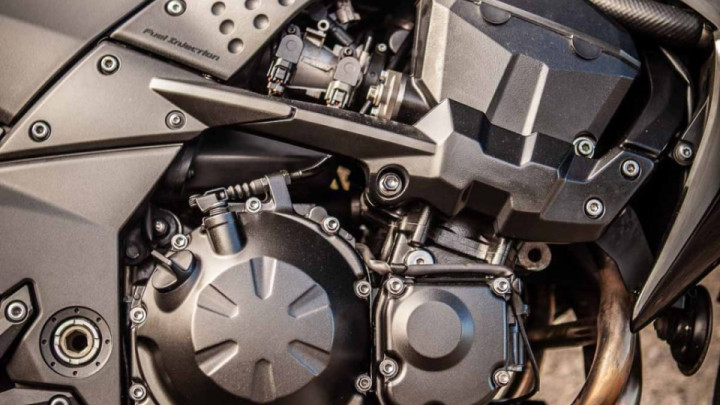
The engine was a liquid-cooled inline-four with double overhead camshafts and four valves per cylinder. In plain language, that meant a compact four-cylinder unit designed to rev freely and breathe well at higher engine speeds, but in this application tuned to deliver stronger road-going flexibility than a supersport engine. Fuel injection was standard from the start, which mattered in this period not because it automatically made the bike faster, but because it helped Kawasaki meet emissions rules and gave more precise fuelling control than carburettors in changing conditions.
The frame on the original model was a steel backbone design rather than an expensive aluminium twin-spar arrangement. A twin-spar frame uses two main beams running from the steering head toward the swingarm pivot, usually to maximise stiffness and precise wheel control in high-performance applications. Kawasaki’s steel structure was cheaper to manufacture and entirely appropriate for the bike’s role, though it also helped explain why the Z750 was never an especially light machine for its class.
Suspension was conventional by naked-bike standards of the time: telescopic front forks and a rear monoshock. Braking hardware and wheel sizes followed sports-roadster practice rather than budget commuter norms. The point of the chassis was not to make the Z750 into an out-and-out track tool. It was to give it enough substance that the engine’s extra capacity could be used with confidence on fast roads.
Engine character and performance
The Z750’s engine defined the bike. Period quoted output varied slightly by year and market, but the original model was generally placed a little above 100 bhp, with later versions rising further. Those numbers matter less than the way the bike delivered them. Compared with 600 cc inline-four rivals, the Kawasaki usually felt fuller in the middle of the rev range. Riders did not need to chase the red line as relentlessly to make brisk progress, and that suited everyday road use.
It still behaved like a four-cylinder motorcycle, not a lazy twin. The power built in a smooth, linear way, with the strongest shove higher up the rev band than on a comparable parallel twin or V-twin. But it had enough displacement to avoid the thin low-end feel that could make some 600-class fours seem busy in urban riding. Contemporary road tests often described it as usefully flexible rather than especially charismatic. That was a fair reading. The engine’s strength was not eccentric personality; it was accessible speed.
There were criticisms. Early fuel injection could feel abrupt at very small throttle openings, a complaint common to many motorcycles of the period rather than unique to Kawasaki. Some testers also found that the gearbox and clutch action were competent rather than notably slick. Vibration was not generally treated as a major flaw, but the motor could feel coarse compared with softer, less highly strung all-rounders.
Where the engine really suited the motorcycle was overtaking and short bursts of fast-road riding. Open the throttle in the midrange and it responded with more authority than the class’s 600s, yet without the extra heat, weight transfer, and insurance penalty that came with many 1000 cc nakeds. That balance explains much of the Z750’s appeal.
Chassis, handling, and brakes
If the engine sold the Z750, the chassis explained both its strengths and its limits. This was not a fragile or underdeveloped motorcycle. It had a planted feel that many riders liked, especially at ordinary road speeds and on open A-roads. It tracked steadily, coped well with commuting and weekend scratching, and did not have the nervous, hyperactive steering that sometimes makes a naked bike tiring on poor surfaces.
Weight was the trade-off. Depending on year and specification, the Z750 carried noticeably more mass than some direct rivals. That affected low-speed manoeuvring and could dull the first moment of turn-in. It was not hard to ride, but neither was it notably light on its feet. Period testers often found that it preferred a deliberate riding style: set it up, turn it cleanly, and drive out on the engine. Riders expecting supersport sharpness from a broad-handlebar naked sometimes came away slightly disappointed.
Suspension on the early standard model was adequate rather than lavish. On smoother roads it worked well enough, but hard riding could expose soft damping control or limited sophistication compared with more expensive machines. The brakes were generally strong enough for the bike’s performance, though test reports varied on feel and outright bite. As with many motorcycles in this class, tyre choice and suspension condition made a real difference once examples entered the used market.
The 2007 redesign improved matters. Kawasaki revised the frame, swingarm, bodywork, and suspension, and road tests from that point often described the bike as sharper and better controlled than the first version. It still was not the class’s lightest or most delicate handler, but the update made the Z750 feel less like a price-led derivative and more like a mature model in its own right.
Design, ergonomics, and everyday use
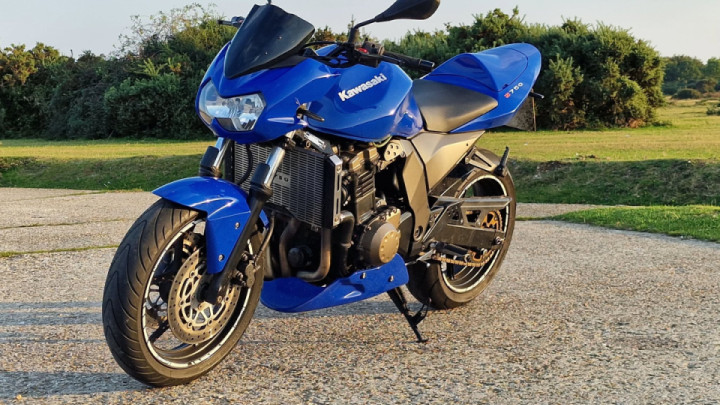
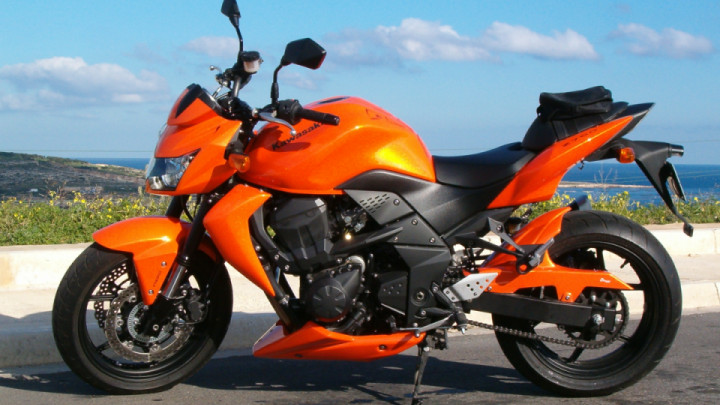
Kawasaki’s styling department understood the assignment. The Z750 took the hard-edged, angular “Sugomi”-before-Sugomi visual aggression of the early 2000s Z family and scaled it into a machine that looked serious without being exotic. The high tail, compact headlight assembly, exposed engine, and minimal bodywork gave it the stripped, urban look that many buyers wanted. It resembled a streetfighter from the factory, which was part of the point.
The riding position was upright, with a wide handlebar and a stance that gave good traffic visibility and decent leverage at lower speeds. For commuting and general road use, that layout made sense. Wind protection was minimal on the naked version, exactly as expected. At motorway pace the rider took the full force of the air, and long-distance comfort depended heavily on individual tolerance and accessory screens. Kawasaki later offered the half-faired Z750S for riders who wanted more practicality.
Seat comfort drew mixed reviews. Some riders found it acceptable for medium-distance use, while others thought it became tiresome on longer journeys. Passenger accommodation was serviceable rather than generous. Fuel range was reasonable for the class, helped by the fact that the engine, although larger than a 600, was not an extreme high-performance unit. Still, nobody bought a Z750 because it was a miniature sports-tourer. Its everyday usability came from simplicity, upright ergonomics, and enough engine to make routine riding easy.
Instrumentation and finish changed over the production run. Early bikes carried a fairly typical mix of analogue and digital display elements, while later updates sharpened the presentation. Build quality was broadly acceptable for a Japanese mid-price motorcycle of the era, though finish on exposed metal and fasteners naturally depended on climate, storage, and cleaning habits. Used examples that lived through salted winters can show corrosion in exactly the places experienced buyers would expect.
How the model evolved
The 2004 launch model
The first modern Z750 appeared for 2004. It established the formula: 748 cc inline-four engine, naked styling derived from the Z1000, steel chassis, and a price positioned to pull buyers away from 600-class roadsters. In several markets it quickly became more than a supporting act. For many riders, this was the Z they could actually afford.
That first generation did its job well, but it also showed where the cost savings lay. Suspension and overall finish were good rather than class-leading, and the bike’s weight meant it did not always feel as lively as its styling suggested. Even so, the combination of size, performance, and value proved hard to ignore.
The Z750S
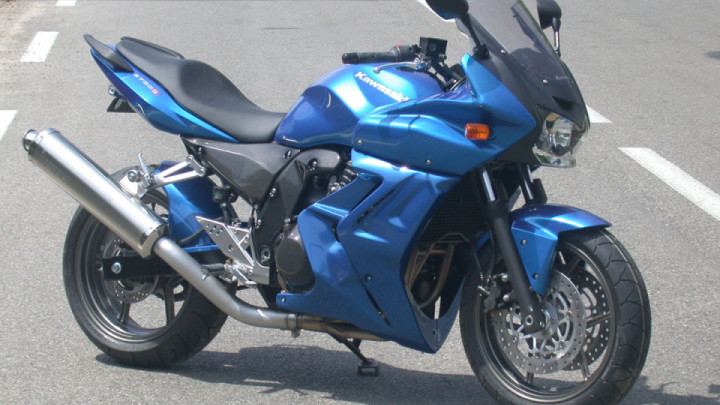
Kawasaki soon expanded the range with the Z750S, a semi-faired version intended to broaden the bike’s usefulness. This was not merely a cosmetic exercise. The added fairing and screen gave better wind protection, and the altered ergonomics and bodywork made the S model a more realistic choice for regular distance riding. It never had the same visual impact as the pure naked bike, and it is less remembered today, but it filled an important role in the line-up.
The 2007 redesign
The major turning point came for 2007, when Kawasaki heavily revised the Z750. The styling became more aggressive and closer in spirit to the contemporary Z1000. More importantly, the company reworked the chassis and suspension and increased claimed power. The engine remained a 748 cc inline-four, but the package around it became more purposeful.
This version is often treated as the definitive Z750 because it addressed several criticisms of the original without abandoning the model’s main strengths. It looked tougher, felt more sorted on the road, and benefited from the fact that the class itself had become more competitive. By then, buyers expected a middleweight-plus naked bike to be more than a cheap way into a brand image. The revised Z750 met that expectation better than its predecessor.
Z750R
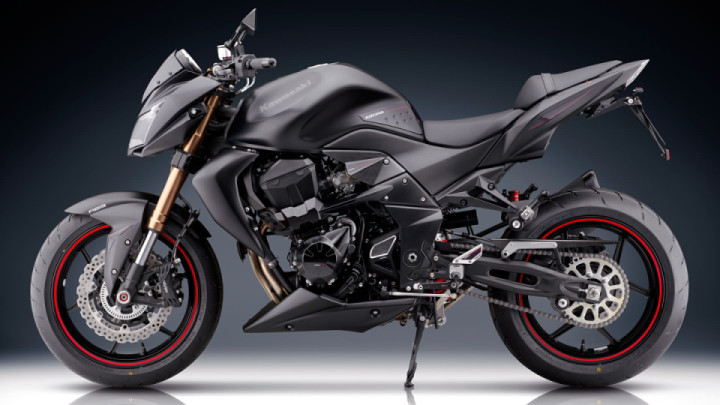
Near the end of the line, Kawasaki introduced the Z750R. This was not a separate engine concept or a homologation special. It was a more focused version of the standard bike, with upgraded suspension and cycle parts intended to sharpen the riding experience. Equipment varied by market, but the idea was clear: offer a premium Z750 for riders who liked the base model yet wanted better control and a more distinctive specification.
The Z750R made sense because the naked-bike market had kept moving upward. Rivals were becoming more polished, and buyers were more willing to pay for suspension quality and finish rather than engine capacity alone. The R did not turn the bike into a supersport-alternative chassis, but it narrowed one of the standard model’s clearest weaknesses.
Market position and rivals
The Z750 occupied an unusually effective position. Against a Honda Hornet 600, it offered more capacity, more visual heft, and stronger midrange. Against larger machines such as the Yamaha FZ1 or Kawasaki’s own Z1000, it was cheaper and less excessive for ordinary road use. Against the long-running Suzuki Bandit 650 and 1200/1250 family, it looked more modern and more overtly sporty, even if the Bandit could make a stronger case for comfort and utility.
That left it somewhere between categories, which was exactly why it sold. Riders moving up from commuter twins or restricted middleweights often saw it as an attainable “big bike.” More experienced owners could treat it as a practical everyday naked with enough pace to stay interesting. In markets such as France, Italy, and the UK, that broad appeal helped the bike build a substantial presence.
It also benefited from timing. The mid-2000s were good years for aggressive naked bikes. Supersport sales still mattered, but many road riders had begun to realise that high bars, visible engines, and less bodywork often made more sense outside a racetrack. The Z750 was part of that shift, though not the only cause of it.
Reception at the time
Press reception was generally positive, with familiar reservations. Reviewers liked the engine’s real-world strength, the assertive styling, and the value proposition. They were less impressed by the weight and by suspension that, in standard form, could feel ordinary when the pace rose. Those judgments remained fairly consistent across the model’s life: the Z750 was rarely dismissed, but it was not usually described as the sharpest handler in the class.
Owner reception often seems warmer than period road-test scoring alone would suggest. That happens with motorcycles that are slightly better to live with than to assess on a one-day launch. The Kawasaki gave people what they actually used: an upright riding position, a reliable Japanese four-cylinder engine, a strong midrange, and styling that still looked substantial parked outside a workplace or café. It was easy to understand why buyers formed a bond with it, even if journalists continued to note its dynamic compromises.
Reliability, faults, and ownership concerns
Mechanically, the Z750 has a generally solid reputation when serviced properly. The engine is not widely known as a fundamentally fragile design, and many examples have covered high mileages. As usual with mass-market Japanese fours of this period, neglect is a larger threat than inherent weakness.
That said, ownership patterns reveal a few recurring themes. Corrosion on fasteners, exhaust components, and some exposed metalwork is common on poorly stored bikes, especially in wet or salted-road climates. Consumables matter because many Z750s were bought by newer riders and used year-round, which means chain wear, tired wheel bearings, weak batteries, and neglected brake calipers are not unusual on older examples.
Some owners and workshops have reported abrupt low-speed fuelling on certain years, though the severity varies and can be influenced by maintenance condition, throttle-body balance, exhaust changes, or aftermarket fuel modules. Regulator-rectifier and charging-system complaints appear often enough in used-bike discussion to be worth checking, but they should be treated as inspection points rather than proof of a universal defect. Suspension wear is another age-related issue. A tired shock absorber or neglected fork oil can make the bike feel much worse than it did when new, unfairly reinforcing the model’s reputation for heaviness.
As with many popular naked bikes, modification is a major variable. Aftermarket silencers, tail tidies, handlebars, indicators, and non-standard mirrors are common. Some changes are harmless; some are signs of crash damage or careless electrical work. A standard or carefully maintained example usually tells a better story than a heavily altered one.
Official recall details varied by market and production range, so they need to be checked by VIN rather than assumed across the whole model line. Used buyers are usually better served by confirming region-specific recall completion through a dealer or national database than by relying on generic online lists.
The Z750 in Kawasaki’s wider history
The Z750 mattered because it helped define Kawasaki’s modern European-style naked-bike strategy before the company adopted later design language and electronics-heavy product planning. It proved there was strong demand for a motorcycle that was aggressive in appearance, serious enough in performance, and still financially reachable. That formula would carry forward into the Z800 and later Z900, each one refining the same basic idea with more sophisticated chassis work, emissions updates, and eventually modern rider aids.
In that sense, the Z750 was a bridge model. It connected the rough-edged naked-bike boom of the early 2000s with the more polished, premium middleweight nakeds that followed. It was not the lightest, not the most refined, and not the most technically adventurous bike in its class. But it understood the brief better than many of its rivals. Riders wanted a four-cylinder naked that looked big, felt fast on the road, and did not cost Z1000 money. Kawasaki gave them exactly that, and the sales success of the bike shaped the company’s next decade of Z-family development.
That is why the Z750 remains easy to place in motorcycle history. It was the machine that made the mid-capacity Kawasaki Z into a mainstream fixture rather than a side note, and later models such as the Z800 and especially the Z900 make most sense when viewed as attempts to keep the Z750’s market instinct while fixing its weight and chassis compromises.