Yamaha YZF R6 About - Overview, History & Details
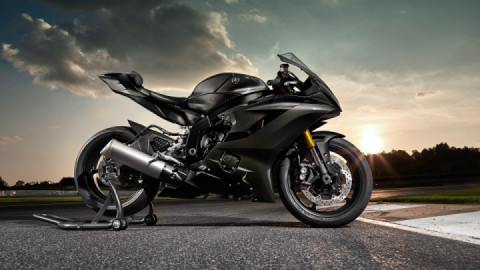
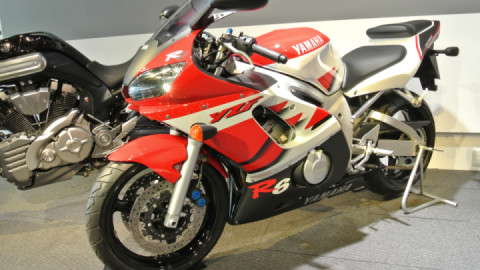
The Yamaha YZF-R6 was Yamaha’s answer to a changing supersport market: a 600 cc class that had shifted from being a brisk road category into a technical arms race shaped by racetrack expectations, magazine comparison tests, and national supersport racing rules. Introduced for 1999 and sold in various forms for more than two decades, the R6 became one of the defining middleweight sport bikes of its era. It mattered not simply because it was fast, but because Yamaha repeatedly used it to push the idea that a 600 should feel like a scaled-down superbike rather than a softened all-rounder.
That approach gave the R6 a clear identity. Across its generations, it was usually one of the sharper, more focused bikes in the class, known for a high-revving inline-four engine, compact proportions, and handling that rewarded committed riding. It was also a motorcycle that changed with the times: carburettors gave way to fuel injection, steel components gave way to more aluminium and magnesium in key areas, and electronics gradually became central to how the machine delivered its performance. By the end of its roadgoing life in many markets, the Yamaha YZF-R6 had come to represent both the peak and the limits of the 600 cc supersport formula.
Why Yamaha created it
When the R6 appeared, Yamaha already had experience with high-performance 600s, most directly through the Yamaha FZR600 and the earlier YZF600R Thundercat. But the late-1990s supersport class was moving quickly. Honda’s Honda CBR600F4, Kawasaki’s ZX-6R, and Suzuki’s GSX-R600 were pulling the category toward lighter weight, racier ergonomics, and stronger top-end performance. Riders increasingly expected a 600 to deliver track-day credibility as well as road speed.
The YZF600R remained a capable road sport bike, but it was broader in character and less extreme in intent. The R6 gave Yamaha a more direct class rival: smaller, lighter, more aggressive in its riding position, and tuned around the idea that maximum performance mattered. That did not mean it was unusable on the road. Early tests often noted that it still had enough flexibility and refinement for everyday riding. But the priorities were obvious. The R6 was designed to win attention in a class where handling precision, peak power, and lap-time potential carried huge weight.
Its timing also reflected Yamaha’s wider sport-bike strategy. The company had already established the YZF-R1 as a disruptive litre-class machine for 1998. The R6 followed that template in miniature. It borrowed the visual language, the concentrated mass, and the sense that packaging was being pushed very hard for performance reasons. In effect, Yamaha offered a family resemblance between the flagship superbike and its middleweight supersport.
The basic engineering idea
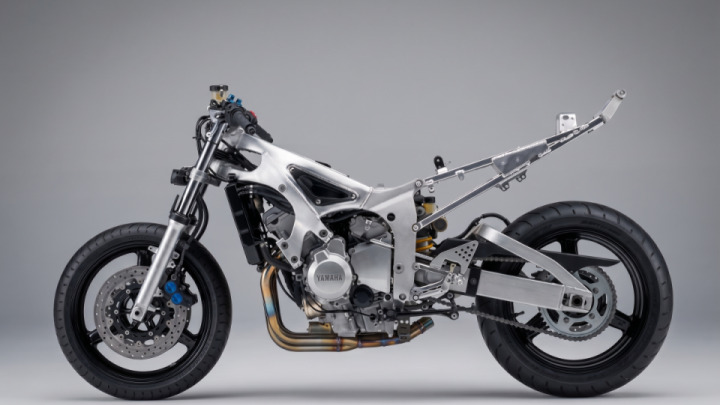
From the start, the R6 used the configuration that defined most serious Japanese supersport 600s of the period: a liquid-cooled, transverse inline-four in an aluminium perimeter frame. A perimeter frame places the main spars around the sides of the engine, creating a direct load path between steering head and swingarm pivot. In a sport bike, the aim is controlled stiffness and compact packaging rather than simplicity or low cost.
On the R6, that formula was taken in a particularly concentrated direction. Yamaha worked to reduce overall size, centralise weight, and let the engine rev hard. Contemporary reports made much of the bike’s low claimed dry weight and narrow proportions. Even before one looked at the specification sheet, the bike’s scale told the story: short tail, tightly wrapped bodywork, and little excess mass visible anywhere.
That compactness shaped the whole motorcycle. The engine was not just a power unit but part of the packaging solution. Chassis dimensions, intake routing, fuel-tank shape, and seat height all had to work around the need for a small frontal area and sporty rider position. As with many focused supersports, the benefit was agility and a race-bike feel. The cost was less comfort, less space, and a setup that made more sense at speed than in heavy traffic.
Engine development and character
The R6’s engine remained a 599 cc inline-four throughout its production life, but the details changed significantly. The first generation arrived with carburettors and a short-stroke layout intended to support high engine speeds. Yamaha quoted figures that placed it at the sharp end of the class, though exact output comparisons between rivals were often blurred by ram-air claims, measurement standards, and market-specific restrictions. What mattered more in use was the character: the engine was eager, free-revving, and most convincing when ridden in the upper half of the rev range.
That trait stayed central to the R6 identity. Riders who came from torquier twins or larger-capacity fours often found that the bike asked to be worked hard. Below the middle of the rev range, especially on later emissions-era versions, it could feel relatively calm. As the revs climbed, it came alive. Period tests regularly described a stronger rush toward the top end than some softer rivals offered. That made the R6 exciting on track and rewarding on a fast road, but it also meant the bike could feel less relaxed in ordinary road use if the rider was unwilling to use the gearbox.
Fuel injection arrived with the 2003 redesign, part of a major generational change rather than an isolated update. Injection improved cold starting, emissions control, and throttle metering, although early fuel-injected supersports across the industry were not always flawless at small throttle openings. Yamaha continued refining the system over later generations, and by the late 2000s the R6 had acquired more sophisticated intake and throttle strategies to balance top-end power with driveability.
A major step came with the 2006-generation machine, which introduced Yamaha Chip Controlled Throttle (YCC-T), a ride-by-wire system. In a ride-by-wire setup, the throttle grip no longer opens the throttles directly by cable; instead, it sends a signal to an electronic control system that determines throttle-plate movement. On the R6, the point was not luxury or convenience. It was performance control. Yamaha used the system to shape throttle response and help the engine maintain strong output at very high rpm.
That generation also adopted Yamaha Chip Controlled Intake (YCC-I) a little later in the model’s life, with variable intake tract length intended to broaden the spread of power. A variable intake system changes the effective length of the intake funnels according to engine speed. Shorter tracts tend to favour high-rpm breathing, while longer tracts can help midrange response. On a 600 tuned as aggressively as the R6, such systems were an attempt to recover some flexibility without giving away the top-end charge that defined the class.
Published performance figures varied by year and market, and later Euro-compliant versions did not always match the freer early bikes in exactly the same way. Still, the broad pattern held: the R6 was one of the revviest and least lazy 600s. It asked for commitment. In return, it delivered the kind of top-end hit and corner-exit urgency that made supersport riders accept the compromises.
Chassis, suspension, and brakes
The aluminium Deltabox frame was central to the R6 story. Yamaha had used the Deltabox name for years, but on the R6 it became part of the model’s identity: a stiff, compact twin-spar chassis aimed at precise steering and high cornering loads. Frame evolution across the generations was steady rather than theatrical. Yamaha revised rigidity balance, geometry, and weight distribution as tyre technology, suspension demands, and racing priorities changed.
Early models already had the essentials expected of a serious supersport: adjustable suspension, a braced aluminium swingarm, and strong disc brakes. But the R6 became more explicitly track-oriented over time. The 2003 machine was more compact and racier than the original; the 2006 redesign sharpened things further. That later generation introduced a more advanced front-end layout and radial-mount brake calipers. A radial-mount caliper bolts parallel to the brake disc rather than across it, a design that can improve stiffness and braking feel, though the overall result still depends on master cylinder setup, pads, fork behaviour, and tyre grip.
On the road and track, period testers usually found the R6 quick-steering and highly capable, but also more sensitive to setup than softer rivals. That was part of its appeal and part of its warning label. Suspension settings, tyre condition, and rider input mattered. An R6 in good order could feel exact and eager, especially on smooth tarmac. A neglected or badly set up example could feel nervous, harsh, or tiring.
Yamaha also had to track the changes in race-bred tyre design and braking expectations that affected all supersports in the 2000s. As grip levels rose, chassis tuning became less about simple stiffness claims and more about how the bike used that grip while turning, braking, and picking up the throttle. The best R6 generations earned their reputation not because they were universally easy, but because they could be ridden very hard once properly understood.
What it was like to ride
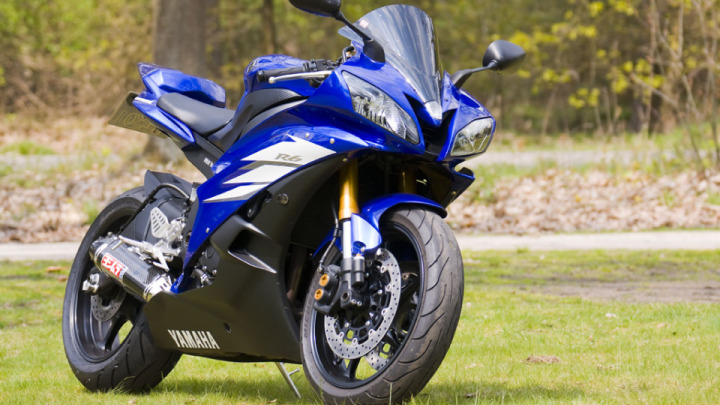
Road tests across the model’s history tend to agree on a few basic points. The R6 usually felt smaller than many rivals, turned readily, and delivered its performance in a way that encouraged high corner speed and high rpm. It was not the roomiest 600, and not always the most forgiving. That was deliberate.
Early bikes were praised for combining very low weight with a surprisingly civil road manner, though the civility was relative to the class rather than absolute in touring terms. As the model became more specialised, especially from the mid-2000s onward, the riding position grew more demanding and the engine character more race-biased. Several contemporary reviews described the later R6 as one of the most track-focused machines in the segment, superb when used near its intended pace and less satisfying when pottering or commuting.
That did not make it a bad road bike. It made it a selective one. The narrow seat, high footrests, and low clip-ons put the rider into a committed crouch. Wind protection worked best when tucked in. At urban speeds, the engine’s need for revs and the steering geometry’s directness could make the bike feel busy. On a clear road or circuit, those same traits made sense. The chassis held lines accurately, the brakes responded with little delay, and the engine rewarded riders willing to keep it spinning.
Compared with some rivals, the R6 often traded a little everyday ease for sharper focus. A Honda CBR600RR was frequently seen as the more rounded package, and certain generations of the Triumph Daytona 675 offered a different kind of usable midrange thanks to their three-cylinder layout. The Yamaha’s answer was precision, rev hunger, and a race-oriented feel that many track riders preferred.
Generations and major changes
1999 to 2002: the original R6
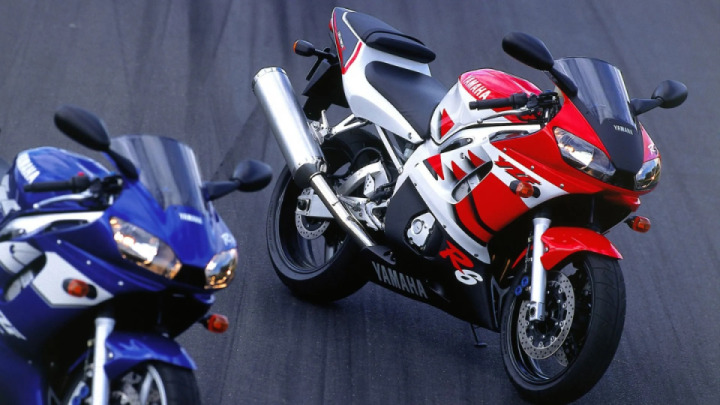
The first YZF-R6 established the formula. It was compact, light, carburetted, and explicitly modelled on the R1’s design philosophy. In period, one of its headline claims was that it brought genuine superbike-style intent into the 600 class without becoming completely impractical. It immediately became a serious benchmark in comparison tests, even if the exact class leader shifted from one magazine or year to another.
These early bikes now carry a certain purity. They predate the heavy electronic layer of modern sport bikes, and their responses are mechanically direct. They are also old enough that condition matters more than the original brochure figures. Carburettor wear, tired suspension, corroded fasteners, and crash damage often define ownership more than Yamaha’s original engineering choices.
2003 to 2005: major redesign and fuel injection
The 2003 model was not a light facelift. Yamaha reworked the bike substantially, adding fuel injection and pushing the layout further toward race-bike compactness. Styling became tighter and more angular, and the chassis package moved closer to what riders expected from a dedicated supersport weapon rather than a fast road 600.
This generation helped keep the R6 relevant as emissions rules tightened and competitors improved. It also marked the period when supersport development across the class became increasingly expensive and increasingly specialised. The easy gains had gone. From here on, refinement came from packaging, intake design, electronic control, and fine chassis tuning as much as from simple increases in quoted horsepower.
2006 onward: the high-rpm, race-focused R6
The 2006 redesign is often treated as the definitive modern R6. It arrived with a new chassis and engine package, ride-by-wire throttle control, and a still stronger emphasis on racetrack performance. Yamaha quoted an exceptionally high redline for a production 600, and much of the bike’s identity centred on that willingness to rev.
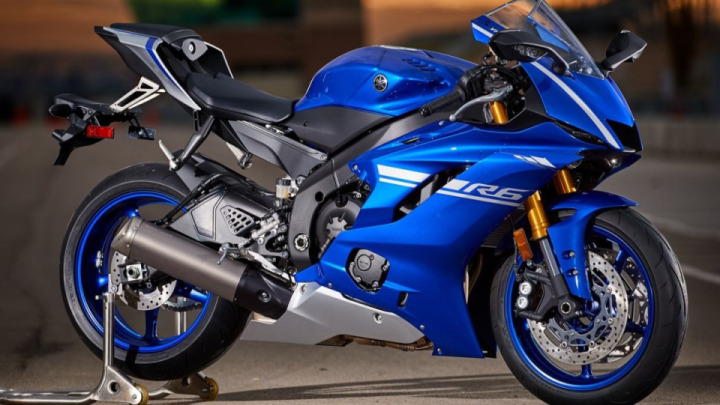
Subsequent updates were evolutionary. The 2008 model year brought YCC-I variable intake technology. Later bikes gained detail improvements, suspension revisions, brake changes, and eventually ABS in some markets. The 2017 facelift gave the R6 bodywork and electronics that visually tied it more closely to contemporary Yamaha superbikes, especially the Yamaha YZF-R1, while retaining the established engine architecture.
By then the class had changed. Sales volumes for 600 cc supersports were weakening in many countries, squeezed by insurance costs, licensing structures, naked-bike demand, and the simple fact that litre bikes and middleweight twins had become more accessible. Yamaha kept the R6 alive longer than some rivals kept equivalent models in full roadgoing form, but emissions and cost pressures eventually narrowed its role. In Europe, road registration of new R6 models ended after the bike could not be justified under the latest emissions requirements in standard form, though track-oriented and race-focused continuations followed in some markets.
Design, aerodynamics, and equipment
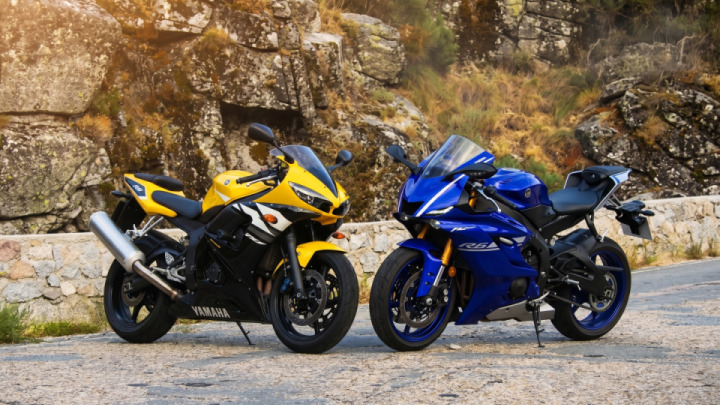
R6 styling was never separate from function, even if Yamaha naturally used the bike’s racing image in its marketing. The first model drew heavily on the visual shock of the original R1, then later generations became sharper and more tightly packaged. Air intake placement, fairing shape, and rider tuck all reflected the expectation that the motorcycle would be ridden hard.
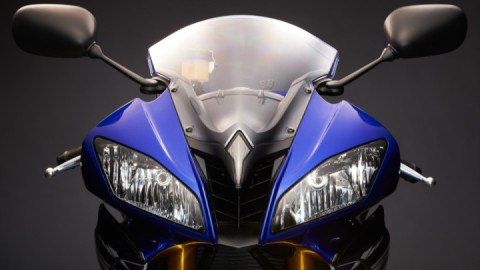
The 2017 update made this especially clear. Its front-end design moved closer to Yamaha’s contemporary racing-influenced family look, with central ram-air intake treatment and slimmer lighting arrangements. The bike looked more severe than ever, but the shape also acknowledged how modern sport-bike buyers judged these machines: partly by lap-time promise, partly by visual connection to professional racing and superbike flagships.
Instrumentation evolved from simple analogue emphasis toward more complex digital displays, though the R6 never became a gadget-led motorcycle in the way later superbikes did. Electronics arrived because they served performance. Traction control appeared on late roadgoing versions, ABS became available or standard depending on market and year, and suspension specification changed over the years. But the core message remained consistent. This was a 600 designed around speed and control, not around touring convenience or urban friendliness.
Use on the road and ownership reality
Owning an R6 has always depended on whether the buyer actually wants a supersport 600 rather than merely admires one. For short fast rides, track days, and riders who enjoy using a close-ratio gearbox and keeping an engine on the boil, the bike makes sense. For commuting through traffic, carrying a passenger often, or covering long motorway distances in comfort, it makes far less sense than a sport-touring or naked alternative.
Fuel consumption was rarely the headline issue in this class, but real-world economy varied heavily with use. A gently ridden R6 could be reasonable enough for a performance 600; a track day or constant high-rpm road use would change that quickly. Range was adequate rather than generous. Heat management, especially in slow traffic on later tightly faired models, could also be noticeable.
Passenger accommodation was usually secondary. Seats were small, rear pegs high, and the compact packaging that helped the bike’s dynamics left little spare space. Luggage provision was minimal unless owners turned to tank bags, tail packs, or aftermarket solutions. None of this was unusual for the class, but the R6 often sat near the more uncompromising end of the spectrum.
Reliability, maintenance, and known issues
The R6 has a generally solid reputation when maintained properly, but that sentence needs context. Many examples have been crashed, raced, poorly repaired, modified, or neglected. As a result, used-bike condition often matters more than any simple claim about model reliability.
The engines are widely regarded as durable if oil changes, valve-clearance inspections, and cooling-system maintenance are not ignored. But supersport 600s live hard lives. Sustained high-rpm use, missed services, amateur tuning, and track abuse can all shorten engine life. Charging-system problems, regulator/rectifier failures, worn cam-chain tensioners, and electrical faults have all been reported on some bikes, though not always as universal defects across every generation. Coils, batteries, and connectors also become age-related concerns on older examples.
On carburetted early models, stale fuel and blocked carburettor circuits are common storage-related problems. On fuel-injected bikes, rough running may come from neglected throttle-body balancing, sensor faults, or poor maintenance rather than from any single design flaw. Suspension linkages, wheel bearings, steering-head bearings, and brake calipers can all suffer from deferred servicing, especially on machines used through wet winters or washed carelessly after track use.
Crash damage is a major issue. Many R6s have been dropped on the road or crashed on track, then rebuilt with mixed parts. Buyers often need to inspect frame alignment, fork condition, swingarm marks, engine-case covers, subframe straightness, and fairing-mount integrity. Cosmetic freshness alone proves very little on a bike of this type.
Official recalls and service actions varied by market and year. Prospective owners need to check the frame number against the relevant national recall database or Yamaha dealer records rather than assume that a campaign mentioned in one country automatically applied everywhere. That matters particularly for a model sold over a long period and in many regulatory markets.
Competitors and where the R6 stood
The R6 spent its life in one of motorcycling’s most fiercely contested classes. Early on it fought the Honda CBR600F4 and later Kawasaki Ninja ZX-6R and Suzuki GSX-R600 on almost yearly technical terms. Later, the Triumph Daytona 675 changed the conversation by offering extra displacement and a three-cylinder engine that gave a different spread of torque and a different sound and feel.
Against Japanese four-cylinder rivals, the Yamaha usually stood out for its compact scale and overtly sporting edge. It was often one of the bikes riders chose for track work or for a race-replica feel on the road. Honda typically offered greater polish and everyday ease. Kawasaki sometimes pursued a slightly different blend of engine performance and chassis stability. Suzuki’s GSX-R600 was a long-running class reference in its own right. The R6 remained competitive because it did not drift away from its original purpose.
That purpose also became the reason the class declined. As road riders moved toward nakeds, adventure bikes, and more flexible middleweights, the kind of commitment the R6 demanded became a niche taste. The bike did not become worse. The market around it changed.
Racing and the R6’s reputation
The R6’s standing owes a great deal to supersport racing. It became a familiar and successful presence in national and international middleweight competition, especially in production-based classes where 600 cc four-cylinder machines formed the backbone of the grid for many years. The exact record varies by country, team, and season, but the broad fact is clear: the R6 became one of the standard race tools of the category.
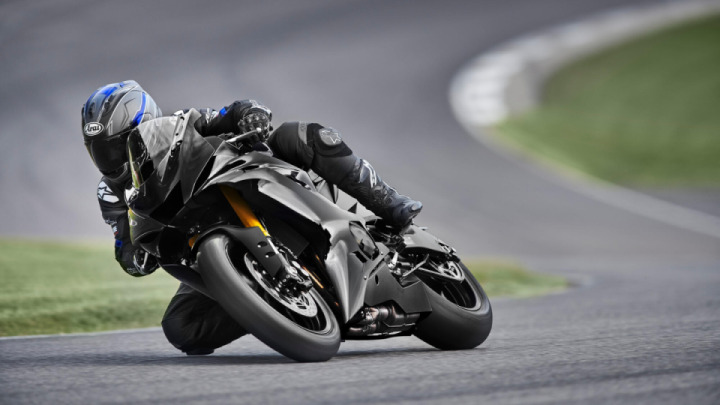
That mattered because the bike’s roadgoing identity and racing identity reinforced each other. When riders or journalists called an R6 “track-focused,” that was not empty marketing language. Yamaha supported and refined a machine whose geometry, engine character, and control systems made sense in the supersport racing environment. The later race-only R6 RACE and track-oriented continuation models underlined that point. Even after the fully road-legal version became harder to justify in emissions terms, the underlying platform still made sense on circuit.
The R6 was also helped by timing. It came of age during the track-day boom and the height of 600 cc supersport prestige. For a generation of riders, an R6 was the motorcycle seen in paddocks, club races, riding schools, and magazine shootouts. That visibility did more to shape its reputation than any single brochure claim ever could.
Legacy
The Yamaha YZF-R6 now occupies an interesting place in motorcycle history. It was never the only great 600 supersport, and some rivals were easier to live with or stronger in certain years. But few stayed so faithful to the idea of the class. The R6 remained committed to high-revving, lightweight, race-shaped performance even when the market increasingly preferred something softer, taller, or more practical.
That is why the bike still matters. It represents the point at which the 600 cc supersport reached full maturity: intensely developed, highly specialised, and brilliant when used as intended. It also shows why the category shrank. A machine as focused as the R6 makes enormous sense on a circuit and only conditional sense in ordinary road life. For many riders, that was exactly the attraction.